The short answer
Pilsner is a pale, golden lager, and every pilsner is a lager; not every lager is a pilsner. Lager is the family, beers made with bottom-fermenting yeast and stored cold.[1] Pilsner is one style within it, named after Pilsen (Plzeň), where on 5 October 1842 Josef Groll “brewed the first batch of the golden lager that came to be known as pilsner beer.”[2] There are two main kinds: Czech, the original, and German pils, which is “drier, crisper”, with a more lingering bitterness.[3] Munich’s helles is the softer, maltier cousin.[4]
Below: where pilsner came from, Czech vs German vs helles side by side, how bitter each is, and the alcohol-free pils and helles worth buying. For lager in general, see what is lager?, and for how it differs from ale, lager vs ale.
Where pilsner came from
Pilsner Urquell tells the story simply: “Josef Groll changed beer forever when he brewed Pilsner Urquell for the first time in 1842.” Its ingredients were local: “soft Plzeň water, delicately bitter Saaz hops”, Moravian barley and a bottom-fermenting yeast, the brewery says.[5] The Oxford Companion to Beer dates the first batch to 5 October 1842.[2]
It travelled fast. German brewers adapted it “to suit brewing conditions in Germany”, and German pils was first brewed in the early 1870s.[3] Munich’s brewers answered with a pale lager of their own: helles, created in 1894 “to compete with pale Pilsner-type beers”,[4] with Spaten introducing the first “real” helles on 21 March 1894.[6]
- 5 Oct 1842Josef Groll brews the first pilsner in Pilsen.
- Early 1870sGerman pils is first brewed, adapted for German conditions.
- 21 Mar 1894Spaten introduces helles, test-marketing it in Hamburg first.
Czech pilsner vs German pils vs helles
| Czech pilsner | German pils | Munich helles | |
|---|---|---|---|
| Where from | Plzeň, Bohemia | Germany | Munich |
| First brewed | 1842 | Early 1870s | 1894 |
| Strength (ABV) | 4.2–5.8% | 4.4–5.2% | 4.7–5.4% |
| Bitterness (IBU) | 30–45 | 22–40 | 16–22 |
| Colour (SRM) | 3.5–6 | 2–4 | 3–5 |
| How it compares | Fuller, maltier and darker than a German pils | Lighter, drier and crisper than a Czech premium pale lager, with a more lingering bitterness | The least bitter of the three |
| Alcohol-free versions we list | We Can Be Friends Ghost Czech Pils (Czech-style) | Krombacher Pilsner, Jever Fun Pilsner | Nirvana Bavarian Helles, Tegernseer Hell Alkoholfrei |
Sources: BJCP;[7][3][4][8] Oxford Companion to Beer.[2][6]
Pale lagers
Pale lagers
Source: BJCP 2021 Beer Style Guidelines.[8]
Show as a table
| Style | Family | Bitterness (IBU) |
|---|---|---|
| American lager | Pale lagers | 8–18 |
| Munich helles | Pale lagers | 16–22 |
| International pale lager | Pale lagers | 18–25 |
| Czech pale lager | Pale lagers | 20–35 |
| German pils | Pale lagers | 22–40 |
| Czech premium pale lager | Pale lagers | 30–45 |
Czech vs German pilsner
The guidelines describe German pils as “lighter in body and color, drier, crisper, more fully attenuated”, with “more lingering bitterness, and higher carbonation than a Czech Premium Pale Lager.”[3] The Oxford Companion to Beer puts numbers on the bitterness: “the average German pilsner today has a bitterness of 28 International Bitterness Units (IBUs)”, while “the Czech pilsners are usually closer to 35 IBU”, and the hops “tend to be the local floral Saaz variety.”[9] In short, a Czech pilsner is fuller-bodied; a German pils is lighter, drier and crisper.
And helles lager?
Hell or helles “simply means ‘pale’” in German.[6] It was created in Munich in 1894 to compete with pilsner,[4] and it’s the least bitter of the three, at 16–22 IBU in the guidelines against 22–40 for German pils.[8] Alcohol-free helles is well represented: Nirvana Bavarian Helles and Tegernseer Hell Alkoholfrei are both in stock, and Days Lager, sold out at Dry Drinker when we checked, is brewed as a traditional helles before the alcohol is removed. The full story, with every alcohol-free helles we list and its price: what is helles?
Is Lucky Saint a pilsner?
Lucky Saint says so: “Lucky Saint lager is a Pilsner-style beer.”[10] Lucky Saint Unfiltered Lager is our top-scoring alcohol-free lager. For how it compares with the big brands, see Lucky Saint vs Heineken 0.0 and Peroni 0.0 vs Lucky Saint, and for the full review, our Lucky Saint review.
Alcohol-free pils and helles to try
Four pilsners and two helles, all in stock at The Alcohol Free Co, Dry Drinker or Wise Bartender on 4 November 2026. For the full ranking, see the best alcohol-free lagers; for Germany’s and the Czech Republic’s beers, German alcohol-free beer and Czech alcohol-free beer.
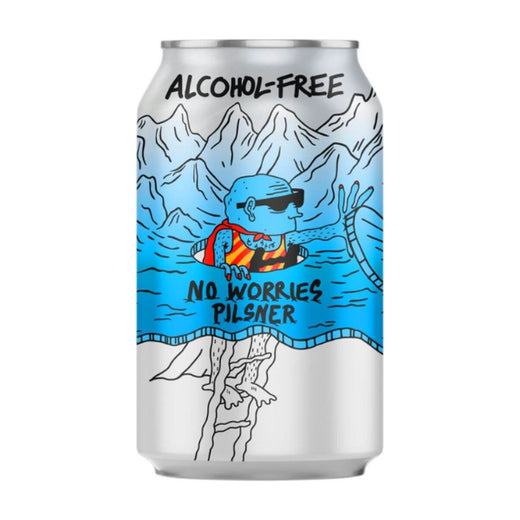
Lervig No Worries Pilsner · 0.5% ABV · Unhopped score 8.0 · from £2.42 a can in a case of 24 at Dry Drinker (4 November 2026)
A 0.5% pilsner from Norway: soft malt, floral hops and a clean, dry finish, the shops say.
Nirvana Pils · 0.5% ABV · Unhopped score 7.7 · from £2.70 for a single at Wise Bartender (4 November 2026)
A German-style pils from Nirvana in Leyton, with what Nirvana calls a firm, well-integrated bitterness and a dry finish.
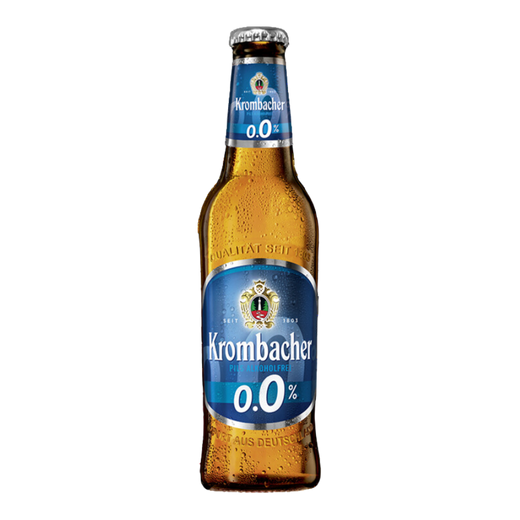
Krombacher Pilsner · 0.0% ABV · Unhopped score 7.3 · from £1.88 a bottle in a case of 24 at The Alcohol Free Co (4 November 2026)
A 0.0% German pils from a family-owned brewery, made with a stopped fermentation and a gentle dealcoholisation, Krombacher says.
Jever Fun Pilsner · <0.5% ABV · from £1.57 a bottle in a case of 24 at Dry Drinker (4 November 2026)
Jever’s alcohol-free Pilsener, brewed as a full beer with the alcohol then gently removed. Jever calls it distinctive, fresh and bitter.
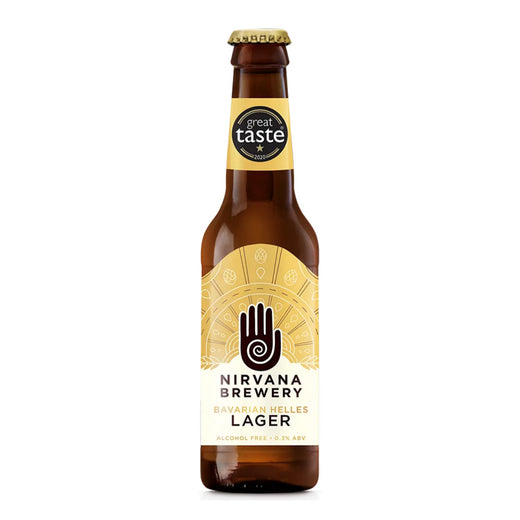
Nirvana Bavarian Helles · 0.3% ABV · Unhopped score 7.8 · from £2.50 a can in a case of 24 at The Alcohol Free Co (4 November 2026)
Nirvana’s take on a classic Bavarian helles, at 0.3%.
Tegernseer Hell Alkoholfrei · <0.5% ABV · from £2.54 a bottle in a case of 24 at The Alcohol Free Co (4 November 2026)
A German helles brewed with mountain spring water, labelled below 0.5%. The brewery calls it exceptionally fresh and easy-drinking.
Some links on this page are affiliate links: if you buy through them we may earn a commission, at no extra cost to you. It never changes what we say. How we make money.
Questions people ask
Is pilsner a lager?
Yes. Pilsner is a pale lager style, first brewed in Pilsen (Plzeň) in 1842. Every pilsner is a lager, but lager also covers helles, festbier, Märzen, dunkel, bock and more.
What is the difference between Czech and German pilsner?
German pils is lighter, drier and crisper, with a more lingering bitterness and more carbonation. Czech pilsner is fuller, maltier and darker, usually with Saaz hops; the Oxford Companion to Beer puts German pilsners at about 28 IBU on average and Czech ones closer to 35.
What does helles mean?
Pale. Hell or helles is German for pale. Helles is Munich’s pale lager, first introduced by Spaten in 1894.
Is Lucky Saint a pilsner?
Lucky Saint describes its lager as a pilsner-style beer.
Are there alcohol-free pilsners?
Yes: Lervig No Worries Pilsner, Nirvana Pils, Krombacher Pilsner (0.0%) and Jever Fun are all in our directory, among others. See the best alcohol-free lagers.
Sources
Opened and checked on 4 November 2026. Beer facts, prices and stock come from each beer’s page on Unhopped and the shops’ own listings on the same day.
- Dornbusch H. Lagering. In: The Oxford Companion to Beer, ed. Garrett Oliver (Oxford University Press, 2012), via Craft Beer & Brewing. beerandbrewing.com
- Hampson T. Pilsen (Plzeň). In: The Oxford Companion to Beer, ed. Garrett Oliver (Oxford University Press, 2012), via Craft Beer & Brewing. beerandbrewing.com
- Beer Judge Certification Program. 2021 Beer Style Guidelines: 5D German Pils. styles.bjcp.org
- Beer Judge Certification Program. 2021 Beer Style Guidelines: 4A Munich Helles. styles.bjcp.org
- Pilsner Urquell. How Pilsner Urquell changed beer forever. Opened 4 November 2026. pilsnerurquell.com
- Seidl C. Helles. In: The Oxford Companion to Beer, ed. Garrett Oliver (Oxford University Press, 2012), via Craft Beer & Brewing. beerandbrewing.com
- Beer Judge Certification Program. 2021 Beer Style Guidelines: 3B Czech Premium Pale Lager. styles.bjcp.org
- Beer Judge Certification Program. 2021 Beer Style Guidelines: vital statistics for styles 1A, 1B, 2A, 3A, 3B, 4A, 4B, 5B, 5D, 6A, 7A, 7B, 8A, 8B, 9A, 11A, 12A, 18B and 21A, each given on the style’s own page (the link is the index of styles). styles.bjcp.org
- Bohemian pilsner. In: The Oxford Companion to Beer, ed. Garrett Oliver (Oxford University Press, 2012), via Craft Beer & Brewing. beerandbrewing.com
- Lucky Saint. Frequently asked questions. Opened 4 November 2026. luckysaint.co
More on lager
- What is lager?How lager is made, where it came from, every type, and the alcohol-free ones.Read it
- Lager vs aleYeast, temperature and time: what really separates them.Read it
- What is pilsner?Pilsner vs lager, Czech vs German, and helles, explained.You’re reading this one
- What is helles?Munich’s pale lager, and the alcohol-free helles to buy.Read it
- What is Kölsch?Cologne’s top-fermented, cold-matured beer.Read it
- The best alcohol-free lagersNineteen ranked by Unhopped score, with prices.Read it
- Lager strengths, brand by brandHow strong Peroni, Madrí, Moretti and the rest really are.Read it
- German alcohol-free beerEight alkoholfrei classics, half of them lagers.Read it
- Czech alcohol-free beerPilsner’s homeland, alcohol-free.Read it
- Every alcohol-free lager we listThe full directory, with our scores.See the list