

The short answer
The yeast, the temperature and the time. Ale is brewed with top-fermenting Saccharomyces cerevisiae, which ferments quickly, in 2–7 days, at around 15–24°C.[1] Lager is brewed with bottom-fermenting lager yeast at around 5–10°C,[2] then usually stored cold for weeks to mature: lagering.[3] That’s how American and most other craft brewers draw the line, the BJCP says. German brewers see lager more as a way of conditioning beer, which is why they call Kölsch “a top-fermented lager beer”.[4]
Below: the two side by side, where lager yeast came from, the beers that are a bit of both, what “ale” means in a British pub, and alcohol-free versions of each. For lager on its own, see what is lager?
Lager vs ale, side by side
| Ale | Lager | |
|---|---|---|
| Yeast | Top-fermenting Saccharomyces cerevisiae | Bottom-fermenting Saccharomyces pastorianus, a hybrid of ale yeast and a cold-tolerant wild yeast |
| Fermentation temperature | 15–24°C | 5–10°C |
| Fermentation time | Quick: 2–7 days | Followed by weeks of cold storage |
| Maturing | Varies by style | Lagering: weeks on the yeast near freezing; traditionally up to three months, 21 days typical today |
| Typical styles | Bitter, golden ale, pale ale, IPA, stout | Pilsner, helles, festbier, Märzen, dunkel, bock |
| Strength (BJCP examples) | Ordinary bitter 3.2–3.8%; American IPA 5.5–7.5% | Czech pale lager 3.0–4.1%; doppelbock 7.0–10.0% |
| Alcohol-free examples | Drop Bear Yuzu Pale Ale, Big Drop Pine Trail Pale Ale | Lucky Saint Unfiltered Lager, Jump Ship Yardarm Lager |
Sources: Oxford Companion to Beer;[1][2][3] Libkind et al.;[5] BJCP.[6]
Ale yeastLager yeast
Ale yeast
Lager yeast
Sources: Oxford Companion to Beer.[1][2]
Show as a table
| Yeast | Family | Fermentation temperature |
|---|---|---|
| Ale (top-fermenting) | Ale yeast | 15–24°C |
| Lager (bottom-fermenting) | Lager yeast | 5–10°C |
The yeast is the difference
Ale yeast is the older of the two. Lager yeast, Saccharomyces pastorianus, is “a domesticated species created by the fusion of a Saccharomyces cerevisiae ale-yeast with an unknown cryotolerant Saccharomyces species”, as a 2011 paper in PNAS put it. The same team found the cold-tolerant parent in southern beech forests in Patagonia and named it Saccharomyces eubayanus.[5] So lager yeast is part ale yeast and part a cold-tolerant wild yeast, and it works at 5–10°C.[2]
Source: Libkind et al., PNAS, 2011.[5]
The beers that are a bit of both
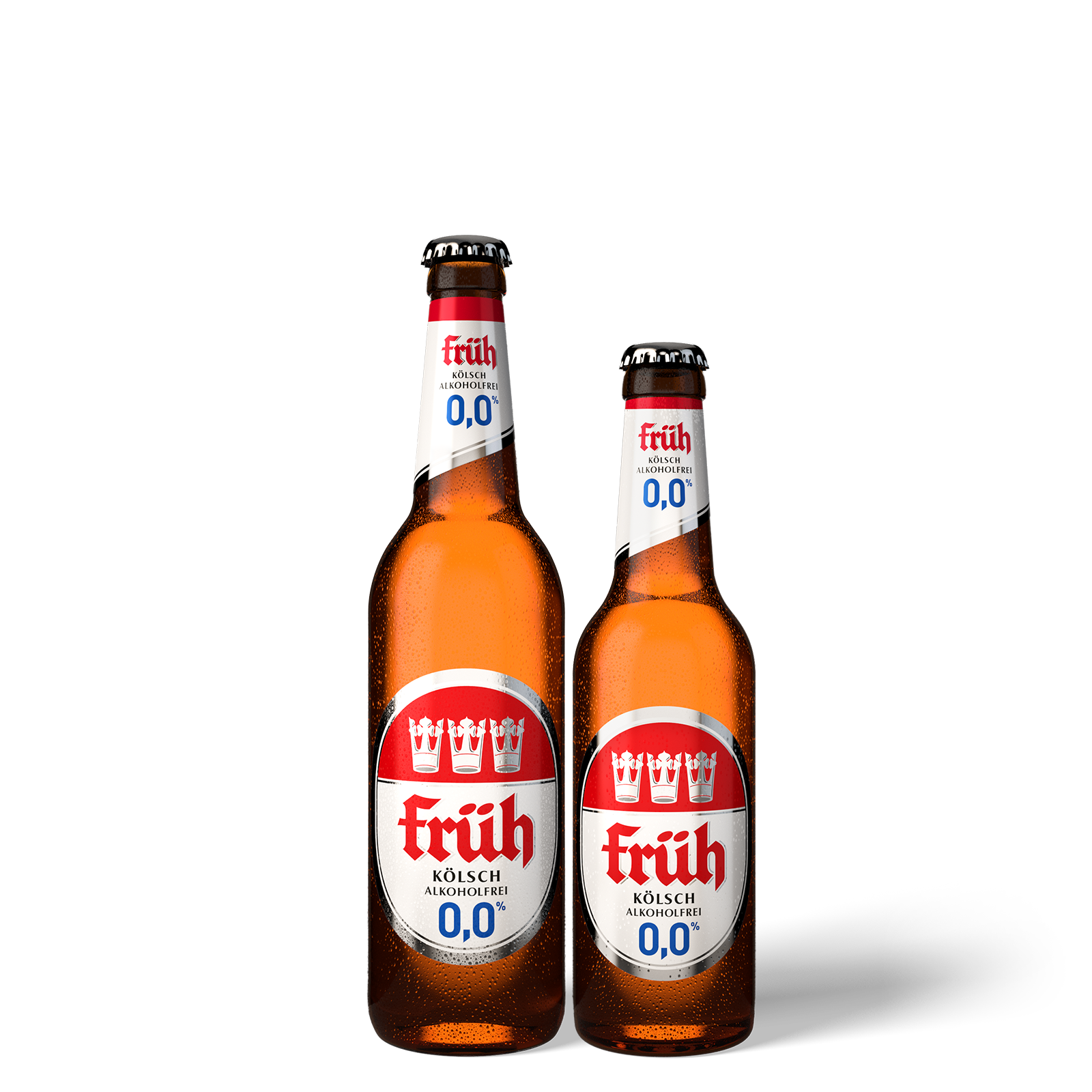
Some styles mix the methods. Kölsch, from Cologne, is a pale, top-fermented beer that is then lagered, and its name is protected for breweries in and around the city.[7] German brewers would call it “a top-fermented lager beer, not an ale”.[4] Altbier takes its name from the “old” style of brewing with top-fermenting yeast; it is “fermented at cool ale temperatures, then cold conditioned.”[8] You can try the first without the alcohol: Früh Kölsch 0.0% is the 0.0% version of Früh’s Kölsch, one of the Cologne breweries the BJCP names. More in what is Kölsch?
What “ale” means in a British pub
Bitter is a British ale style: in the BJCP guidelines an ordinary bitter is just 3.2–3.8%.[6] Golden ale is the British answer to lager: the BJCP says “modern golden ales were developed in England to take on strongly-marketed lagers.”[9] Pale ale and IPA are ales too, as is stout.
LagersAlesHybrids
Lagers
Ales
Hybrids
Source: BJCP 2021 Beer Style Guidelines.[6]
Show as a table
| Style | Family | Strength (ABV) |
|---|---|---|
| Czech pale lager | Lagers | 3–4.1% |
| German pils | Lagers | 4.4–5.2% |
| Munich helles | Lagers | 4.7–5.4% |
| Munich dunkel | Lagers | 4.5–5.6% |
| Doppelbock | Lagers | 7–10% |
| Ordinary bitter | Ales | 3.2–3.8% |
| British golden ale | Ales | 3.8–5% |
| American pale ale | Ales | 4.5–6.2% |
| American IPA | Ales | 5.5–7.5% |
| Kölsch | Hybrids | 4.4–5.2% |
| Altbier | Hybrids | 4.3–5.5% |
Alcohol-free lager and alcohol-free ale
The split carries over into alcohol-free beer: brewers still make lagers and ales, then either remove the alcohol or brew to a low strength from the start. Lucky Saint says its lager “is brewed the same way as a full-strength beer”, then has the alcohol removed by vacuum distillation.[10] Our guides rank both families: the best alcohol-free lagers, the best alcohol-free pale ales and the best alcohol-free IPAs, and for darker ales, the best alcohol-free stouts.
Try the difference: two lagers, two ales and a Kölsch
All in stock at The Alcohol Free Co, Dry Drinker or Wise Bartender on 4 November 2026.
Lucky Saint Unfiltered Lager · 0.5% ABV · Unhopped score 8.7 · from £2.93 a bottle in a case of 24 at Dry Drinker (4 November 2026)
Lager: our top-scoring alcohol-free lager, a pilsner-style beer brewed at full strength then de-alcoholised by vacuum distillation, Lucky Saint says.
Jump Ship Yardarm Lager · <0.5% ABV · Unhopped score 8.1 · from £2.88 a can in a case of 24 at Dry Drinker (4 November 2026)
Lager: Jump Ship’s flagship, brewed to below 0.5% without removing alcohol.
Drop Bear Yuzu Pale Ale · 0.5% ABV · Unhopped score 8.5 · from £2.19 a can in a case of 24 at Dry Drinker (4 November 2026)
Ale: an American-style pale ale with yuzu, with lemon, lime and grapefruit over biscuit malt, Drop Bear says. Vegan.
Big Drop Pine Trail Pale Ale · 0.5% ABV · Unhopped score 8.5 · from £2.54 a can in a pack of 24 at The Alcohol Free Co (4 November 2026)
Ale: Big Drop’s pale ale, with “rosy floral aromas” and “a balanced but obvious bitterness”. The version in the shops contains lactose.
Früh Kölsch 0.0% · 0.0% ABV · from £2.18 a bottle in a case of 12 at Dry Drinker (4 November 2026)
Both: the 0.0% version of Früh’s Kölsch, Cologne’s top-fermented beer. “In taste it’s a real FRÜH, but without alcohol”, the brewery says (our translation).
Some links on this page are affiliate links: if you buy through them we may earn a commission, at no extra cost to you. It never changes what we say. How we make money.
Questions people ask
What is the main difference between lager and ale?
The yeast. Ale uses top-fermenting yeast at around 15–24°C and ferments in days; lager uses bottom-fermenting yeast at around 5–10°C, then is usually stored cold for weeks.
Is pale ale a lager?
No. Pale ale is an ale, brewed with top-fermenting ale yeast. A pilsner or helles is the pale lager equivalent.
Is Kölsch a lager or an ale?
A bit of both. It’s top-fermented like an ale, then lagered. German brewers call it a top-fermented lager beer.
Is lager or ale stronger?
Neither, as a rule. In the BJCP guidelines, ales run from an ordinary bitter at 3.2–3.8% to an American IPA at 5.5–7.5%, and lagers from a Czech pale lager at 3.0–4.1% to a doppelbock at 7.0–10.0%. The alcohol-free versions we list are 0.0% to 0.5%.
Are there alcohol-free ales?
Plenty: pale ales, IPAs, stouts and more. See the best alcohol-free pale ales and the best alcohol-free IPAs.
Sources
Opened and checked on 4 November 2026. Beer facts, prices and stock come from each beer’s page on Unhopped and the shops’ own listings on the same day.
- Jones NR. Ale. In: The Oxford Companion to Beer, ed. Garrett Oliver (Oxford University Press, 2012), via Craft Beer & Brewing. beerandbrewing.com
- Dale C. Bottom fermentation. In: The Oxford Companion to Beer, ed. Garrett Oliver (Oxford University Press, 2012), via Craft Beer & Brewing. beerandbrewing.com
- Dornbusch H. Lagering. In: The Oxford Companion to Beer, ed. Garrett Oliver (Oxford University Press, 2012), via Craft Beer & Brewing. beerandbrewing.com
- Beer Judge Certification Program. 2021 Beer Style Guidelines: Introduction to beer styles, basic categorization. styles.bjcp.org
- Libkind D, Hittinger CT, Valério E, Gonçalves C, Dover J, Johnston M, Gonçalves P, Sampaio JP. Microbe domestication and the identification of the wild genetic stock of lager-brewing yeast. PNAS. 2011;108(35):14539–14544. doi:10.1073/pnas.1105430108. PubMed Central (open access)
- Beer Judge Certification Program. 2021 Beer Style Guidelines: vital statistics for styles 1A, 1B, 2A, 3A, 3B, 4A, 4B, 5B, 5D, 6A, 7A, 7B, 8A, 8B, 9A, 11A, 12A, 18B and 21A, each given on the style’s own page (the link is the index of styles). styles.bjcp.org
- Beer Judge Certification Program. 2021 Beer Style Guidelines: 5B Kölsch. styles.bjcp.org
- Beer Judge Certification Program. 2021 Beer Style Guidelines: 7B Altbier. styles.bjcp.org
- Beer Judge Certification Program. 2021 Beer Style Guidelines: 12A British Golden Ale. styles.bjcp.org
- Lucky Saint. Frequently asked questions. Opened 4 November 2026. luckysaint.co
More on lager
- What is lager?How lager is made, where it came from, every type, and the alcohol-free ones.Read it
- Lager vs aleYeast, temperature and time: what really separates them.You’re reading this one
- What is pilsner?Pilsner vs lager, Czech vs German, and helles, explained.Read it
- What is helles?Munich’s pale lager, and the alcohol-free helles to buy.Read it
- What is Kölsch?Cologne’s top-fermented, cold-matured beer.Read it
- The best alcohol-free lagersNineteen ranked by Unhopped score, with prices.Read it
- Lager strengths, brand by brandHow strong Peroni, Madrí, Moretti and the rest really are.Read it
- German alcohol-free beerEight alkoholfrei classics, half of them lagers.Read it
- Czech alcohol-free beerPilsner’s homeland, alcohol-free.Read it
- Every alcohol-free lager we listThe full directory, with our scores.See the list