How to Brew Alcohol-Free Beer at Home
Published August 2026 · 12-minute read · by Rich, founder of Unhopped
Heads up: there are affiliate links in the buying section at the end — buy through them and we may earn a small commission at no extra cost to you. Everything above that point is drawn from published brewing research, cited in full at the bottom. Full disclosure.
Alcohol-free beer has a reputation among homebrewers as the one style you cannot make at home. Half true. You cannot make a 0.0% at home, and anyone telling you otherwise is selling something. But a genuinely good sub-1% hoppy beer is one of the cheapest, fastest and most forgiving brews on the board — a tiny grain bill, a short mash, and a week in the fermenter.
What follows is the research rather than the folklore. There is more published science on this than most homebrewing forums suggest, and a fair amount of what gets repeated confidently turns out to be wrong.
The fork in the road: two philosophies
Every method of making alcohol-free beer, industrial or domestic, is one of two things. Either you brew real beer and take the alcohol out, or you arrange things so the alcohol never appears. We cover the industrial side in detail in how alcohol-free beer is made; this piece is about what happens when the brewery is your kitchen.
Make a normal beer and strip the ethanol with heat, vacuum or a membrane. This is how most big-brand 0.0% is made.
- Reaches genuine 0.0% territory
- Needs industrial kit — not homebrewable
- Strips 78–99% of the aroma out with the alcohol
Build a wort the yeast largely cannot eat, or use a yeast that cannot eat it. Every home-scale method is a version of this.
- Realistically lands at 0.3–1.1%, not 0.0%
- Needs no equipment you do not already own
- Keeps the aroma, but leaves worty and sweet notes to manage
The distinction matters when you are shopping, too: a beer made the subtractive way and one made the restrictive way taste different in predictable ways, whatever the label says.
Everything home-scale is Route B. That single constraint shapes the whole exercise, including the honest ceiling on how low you can go.
Compiled from Brányik et al. (2012), Salanță et al. (2020), Piornos et al. (2023), Myncke et al. (2025) and Nikulin et al. (2022). Yeast figures are measured; mash figures are modelled.
Route one: mash hot and build a wort yeast cannot eat
The lever here is one enzyme. Beta-amylase is the enzyme that chops starch into maltose, the sugar yeast most wants, and it is fragile — its optimum sits around 63–65°C and it degrades quickly above that. Alpha-amylase, which produces longer unfermentable dextrins, is far more heat-stable and works happily up to 75°C. Mash hot enough and you knock out the enzyme that makes food while leaving the one that makes filler.
The classic measurement of this comes from a 1991 paper in the Journal of the Institute of Brewing, and the effect is dramatic.
Values approximate, read from Fig. 3B of Muller (1991), Journal of the Institute of Brewing 97, 85–92 — the paper reports fermentability graphically rather than in a table. A thin mash at 85°C fell to roughly 6% fermentable.
Read that carefully, because it contains the practical trick. Going from 70°C to 80°C halves fermentability in a thick mash — but in a thin mash the same shift takes it from 65% to about 13%. Water-to-grain ratio is doing as much work as temperature. The same study compared two worts at an identical 1.040 gravity and found maltose had fallen from 4.41 g/L to 0.36 g/L, roughly a twelfth, purely from mashing at 80°C rather than 65°C.
Industry guidance converges on the same window. Lallemand's technical bulletin for low-alcohol brewing models 74°C as yielding around 1.3% potential ABV and 82°C around 0.7%, and recommends an original gravity of 1.020–1.027. Crisp Malt independently recommend 82°C. Both are trade sources rather than peer-reviewed, and Lallemand's figures are calculated rather than measured, but three independent sources landing on 75–85°C is worth something.
Route two: use a yeast that cannot eat maltose
The more elegant approach is to leave the wort alone and change who eats it. Maltose makes up most of the fermentable sugar in beer; a yeast that physically cannot metabolise it will ferment the small glucose and fructose fraction, then stop.
Until recently this was a research curiosity. It is now a shelf of products you can buy, and in 2025 a Ghent University team put nine of them head to head, fermenting every one from the same wort — which makes this the single most useful dataset in the field.
Data: Myncke et al. (2025), ‘Navigating yeast selection for NABLAB production’, Food Chemistry 477:143486. Note that none of these strains reaches the UK’s 0.05% ceiling for the words ‘alcohol-free’ — they land in de-alcoholised territory.
Three things fall out of it. The Pichia kluyveri strains are astonishingly restrained, landing between 0.12% and 0.26%. The Saccharomycodes ludwigii strains and SafBrew LA-01 cluster tightly at 0.45–0.46%, right on the line. And the two maltotriose-negative ale strains, London and Windsor, overshoot at around 1%, which makes them the wrong tool if 0.5% is your target and the right one if you want something that tastes most like ordinary beer.
The catch is flavour. LA-01 is what brewers call POF-positive, meaning it throws phenolic compounds: one study measured 4-vinylguaiacol at roughly six and a half times its sensory threshold, which is why LA-01 beers get described as accidentally wheat-beery. Most of the low-alcohol strains also produced diacetyl above the 17 µg/L threshold — the butterscotch note — with London and Windsor the clean exceptions. Choose the strain for the flavour you want, not just the number.
One more practical note: Fermentis specify that LA-01 beer must be pasteurised after packaging, and that the yeast should not be cropped and repitched. That is a manufacturer instruction, not a suggestion, and it points straight at the section below.
Why it tastes like wort, and what to do about it
The signature fault of low-alcohol beer is a sweet, cereal, cooked-vegetable character that brewers call worty. It comes from three aldehydes — 3-methylbutanal and 2-methylbutanal, both malty and almondy, and methional, which reads as cooked potato.
Here is the part almost nobody explains properly. Those aldehydes are formed in your mash and boil, by Strecker degradation and Maillard reactions. They are in normal beer too. The difference is not that alcohol-free beer makes more of them — it is that alcohol was hiding them.
Data: Gernat, Brouwer & Ottens (2020), ‘Aldehydes as Wort Off-Flavours in Alcohol-Free Beers’, Food and Bioprocess Technology 13(2), 195–216. Removing alcohol does not create the worty character — it unmasks it. Methional is detectable by most tasters at 0.1 ppb in an alcohol-free beer, against a 4.2 ppb threshold in normal beer.
Which reframes the fix entirely. You are not trying to remove a fault the process introduced; you are trying to avoid creating aldehydes in the first place, because you have lost the thing that used to mask them. In practice that means a shorter, less vigorous boil, keeping hot-side oxygen down, and not scorching the wort. It is the same logic that explains why alcohol-free beer tastes watery straight after a full-strength pint, and part of why some alcohol-free beers taste so much better than others.
What the professionals do instead — and why you cannot
It is worth knowing what you are giving up by staying home. Industrial de-alcoholisation reaches numbers no home method can: vacuum distillation and thin-layer evaporation both get under 0.05%, which is the UK ceiling for the words ‘alcohol-free’. Reverse osmosis gets under 0.5%.
But it costs them something, and the number is larger than most drinkers realise.
Data: Piornos et al. (2023), Comprehensive Reviews in Food Science and Food Safety 22(1), Table 2. Higher alcohols are lost at similar rates — 98% for falling-film evaporation, 69% for reverse osmosis.
That is the trade the whole category is built on. Take the alcohol out and you take most of the fruit and floral aroma with it, which is why the best commercial 0.0% beers are usually the ones that add aroma back afterwards or blend. Keep the alcohol out from the start — your route — and you keep the aroma but inherit the worty problem. Neither is free. Our explainer on 0.0% vs 0.5% beer covers what that means on the shelf, and the UK labelling rules cover what you are legally allowed to call the result.
Hops: what changes when the alcohol is not there
Every low-alcohol recipe leans on hops, for the obvious reason that there is not much else holding the beer up. BrewDog's own brewer's note on Nanny State — published free in their DIY Dog collection — puts it plainly: there is not much malt body, so the more hops the better. At 55 IBU on an original gravity of 1.007, it is a beer hopped like a strong IPA and built like a light ale.
But hopping harder does not recover everything, and a 2022 model study at Weihenstephan showed exactly which parts survive. They dry-hopped at a constant rate across four ethanol levels from 0.5% to 10.5% and measured what made it into the beer.
Source: Cocuzza et al. (2022), ‘How alcohol content in dry-hopped beer affects final beer composition’, BrewingScience 75(5/6), 44–53 — a model study dry-hopping at a constant 250 g/hL across four ethanol levels from 0.5% to 10.5%.
The practical upshot: an alcohol-free IPA will always skew floral, citrussy and fruity rather than resinous and dank, because the compounds responsible for dank need ethanol to dissolve into the beer. Chase the terpene alcohols. Do not try to brute-force the terpenes with more hops — the solvent simply is not there. If you want to taste what that ceiling sounds like when a good brewery hits it, our best alcohol-free IPAs and best alcohol-free hazy IPAs are the shortlist, and what is a hazy IPA covers the style itself.
The part nobody warns you about: it spoils
This is the most important section here, and it is the one homebrew guides skip.
Ethanol is a preservative. Beer's safety has always rested on a stack of hurdles — low pH, hop acids, almost no oxygen, dissolved CO2, and alcohol. Take the alcohol out and you have removed one of the load-bearing ones, and organisms that could never survive in beer suddenly can.
The research on this is unusually good and unusually recent. A 2024 review from the brewing science group at Nottingham put it bluntly: no- and low-alcohol beers are at greater microbiological risk than traditional beer. A Cornell challenge study found that E. coli O157:H7 and Salmonella populations actually doubled in low-alcohol beer stored at around 14°C over two months — something that does not happen in normal beer. And a Campden BRI study across fifty UK packaged beers found the hurdle that still works is acidity: at pH 3.8, none of the pathogens tested could grow at all.
Then there is the real-world check. When the Nottingham group sampled 53 draught no- and low-alcohol beers across twelve pubs, 54.7% came back microbiologically unacceptable, with failures correlating to high pH and elevated present gravity. Some samples had refermented enough in the line to exceed the legal alcohol limit for their own category.
So, translated into homebrew practice: keep the pH under 4.0, keep oxygen out at packaging, and either pasteurise or refrigerate and drink it quickly. Do not treat a low-alcohol batch like a normal one and leave it in a warm garage for three months. And if you keg it, be scrupulous about line hygiene — that is where the commercial failures cluster. Worth reading alongside does alcohol-free beer expire, which covers the same physics from the drinker's side.
Three things homebrewers repeat that are not true
Crystal malt is not a reliable brake. It contains fermentable sugars alongside non-fermentable Maillard products, plus starch that can still be broken down in the mash. Maltsters do not publish fermentability figures for it, so you cannot calculate around it either. Mash temperature is the lever with actual data behind it.
Two separate studies say otherwise. A sensory panel found no significant difference in perceived bitterness between 0% and 5% versions of the same beer, and a dry-hopping model study found iso-alpha-acid transfer is unaffected by ethanol. What is measurably missing at 0% is body, sweetness and warmth — not restraint in the bitterness.
The lactic acid bacteria that actually spoil beer carry hop-resistance genes, so hop acids do nothing against the organisms that matter most. Worse, dry hops carry enzymes that chew through exactly the dextrins your hot mash worked to create — which can push a finished beer back over 0.5% in the bottle.
That last one deserves emphasis, because it is a genuine hazard rather than just a flavour issue. Hop creep needs three things: unfermentable extract, live yeast in suspension, and hops added during or after fermentation. A dextrin-rich low-alcohol beer satisfies the first condition maximally, which is exactly why the Brewers Association flag over-pressurised packaging as a consumer safety risk. Dry hop cold, on clean beer, and give it time before you seal anything.
A realistic first attempt
Pulling the evidence together, a sensible first low-alcohol brew looks like this. Target an original gravity around 1.020–1.027. Mash thin and hot — somewhere in the 78–82°C window, thinner than you would normally run, for around 30 minutes; you are not chasing efficiency. Keep the boil short and gentle to limit aldehyde formation. Acidify to bring the finished beer under pH 4.0. Pitch a maltose-negative strain if you want to land under 0.5%, or a maltotriose-negative ale strain if you would rather have something beer-like at around 1%. Keep kettle hopping modest and put your hop budget into late and dry additions, weighted towards varieties that lead with linalool and geraniol. Then package cold, with minimal oxygen, and keep it in the fridge.
One honest caveat. You cannot verify the result. Hydrometer readings at these gravities carry more error than the number you are trying to measure, and the standard formulas were never designed for a 1.020 wort that barely attenuates. If you need a beer to be reliably under a specific threshold, brewing it yourself is not the way to get there — buy one that has been laboratory-tested. That is not me being precious; it is the same reason commercial alcohol-free beer is tested at all.
Or skip the brew day entirely
No shame in it. These three are the beers that show what each route achieves when someone with a lab does it properly — and the first one is the beer that started the whole homebrew tradition of the restrictive method.
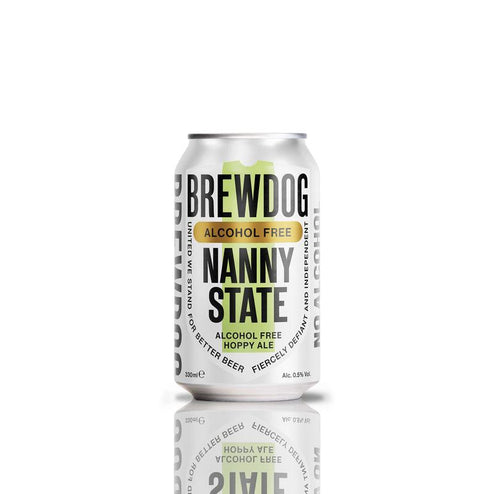
The beer that taught a generation of homebrewers the restrictive method. 55 IBU on an original gravity of 1.007.
Buy at Dry Drinker →Our review →
Proof of what the restrictive route achieves at scale, with the worty character properly engineered out.
Buy at Dry Drinker →Our review →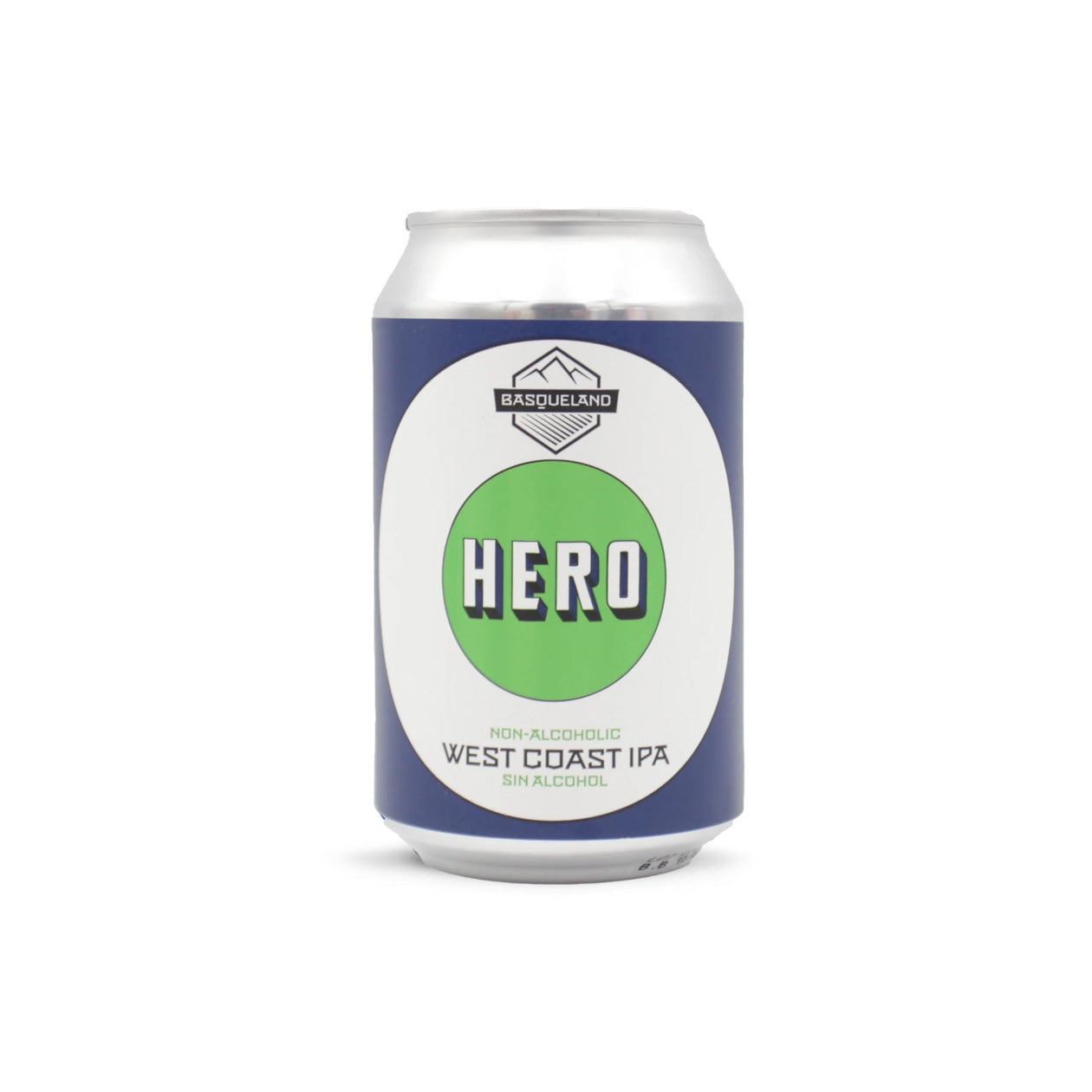
A true 0.0% that still lands the resinous end of the hop spectrum — the hardest trick in the category.
Buy at Dry Drinker →Our review →More across the category in our best craft alcohol-free breweries round-up and the BrewDog alcohol-free range review, or build a mixed case with the Crate Builder.
Frequently asked questions
Sources
Muller, R. (1991). ‘The Effects of Mashing Temperature and Mash Thickness on Wort Carbohydrate Composition’, Journal of the Institute of Brewing, 97, 85–92 — source for the mash temperature and fermentability figures.
Myncke, E. et al. (2025). ‘Navigating yeast selection for NABLAB production: Comparative study of commercial maltose- and maltotriose-negative strains’, Food Chemistry, 477:143486 — source for all nine strain ABV figures, diacetyl and phenolic data.
Gernat, D.C., Brouwer, E. & Ottens, M. (2020). ‘Aldehydes as Wort Off-Flavours in Alcohol-Free Beers — Origin and Control’, Food and Bioprocess Technology, 13(2), 195–216. Read the paper — source for aldehyde retention and sensory thresholds.
Piornos, J.A. et al. (2023). ‘Alcohol-free and low-alcohol beers: aroma chemistry and sensory characteristics’, Comprehensive Reviews in Food Science and Food Safety, 22(1), 233–259. Read the review — source for ester and higher-alcohol losses by method.
Cocuzza, S. et al. (2022). ‘How alcohol content in dry-hopped beer affects final beer composition — a model study’, BrewingScience, 75(5/6), 44–53 — source for which hop compounds transfer at low ABV.
Roselli, G.E. et al. (2024). ‘The two faces of microorganisms in traditional brewing and the implications for no- and low-alcohol beers’, Frontiers in Microbiology, 15:1346724. Read the review. Roselli, G. et al. (2026). ‘The microbiological quality of draught no- and low-alcohol beers’, Journal of the Institute of Brewing, 132(1), 3–16 — source for the 54.7% figure.
Rachon, G. et al. (2024). ‘Survival of Escherichia coli O157, Salmonella Enteritidis, Bacillus cereus and Clostridium botulinum in non-alcoholic beers’, Journal of the Institute of Brewing, 130(4), 250–263 — source for the pH 3.8 finding. Çobo, M. et al. (2023). ‘Survival of Foodborne Pathogens in Low and Nonalcoholic Craft Beer’, Journal of Food Protection — source for the Cornell challenge study.
Ramsey, I. et al. (2020). ‘Understanding the lost functionality of ethanol in non-alcoholic beer’, Scientific Reports, 10:20855 — source for the bitterness and body findings. Brányik, T. et al. (2012). ‘A review of methods of low alcohol and alcohol-free beer production’, Journal of Food Engineering, 108(4), 493–506. Salanță, L.C. et al. (2020). ‘Non-Alcoholic and Craft Beer Production and Challenges’, Processes, 8(11):1382. Nikulin, J., Aisala, H. & Gibson, B. (2022). ‘Production of non-alcoholic beer via cold contact fermentation with Torulaspora delbrueckii’, Journal of the Institute of Brewing, 128(1), 28–35.
Parés Viader, R. et al. (2021). ‘Optimization of Beer Brewing by Monitoring α-Amylase and β-Amylase Activities during Mashing’, Beverages, 7(1):13 — source for the enzyme optima. Cottrell, M. (2025). ‘Contribution of β-amylase from hops to the fermentability of dry hopped beer’, Journal of the Institute of Brewing, 131(2), 92–99, and the Brewers Association Hop Creep Technical Brief — sources for hop creep.
Trade and manufacturer sources, cited as such: Lallemand Brewing, Low Alcohol Beer — Best Practices (modelled alcohol yields); Fermentis, SafBrew LA-01 Technical Guidelines; Crisp Malt, ‘Brewing Low & No Alcohol Beers’; Ashton Lewis in Brew Your Own on crystal malt fermentability; and BrewDog’s DIY Dog recipe collection and Nanny State product page for that beer’s published specification.