
The short answer
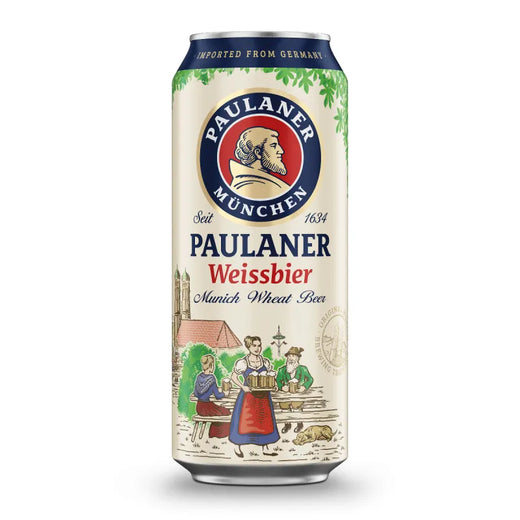
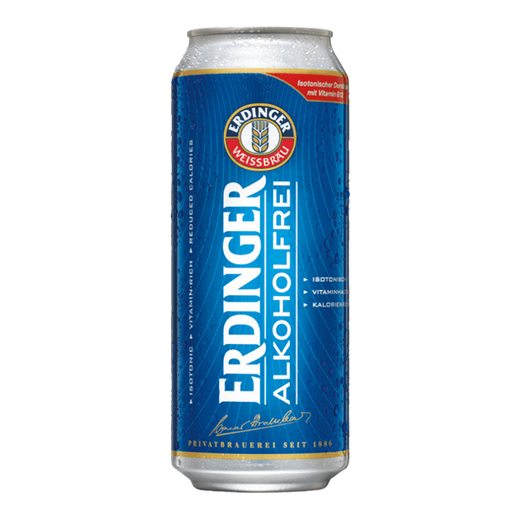
Wheat beer is beer brewed with a large share of wheat as well as barley. There are two classic kinds. German weissbier, also called hefeweizen, is “a pale, refreshing, lightly-hopped German wheat beer” with a “distinctive banana-and-clove” yeast character;[1] German law requires at least 50% malted wheat, and most use 60–70%.[2] Belgian witbier is “a pale, hazy Belgian wheat beer with spices accentuating the yeast character”, brewed with unmalted wheat, coriander seed and dried Curaçao orange peel.[3] Weissbier means “white beer” and hefeweizen “yeast wheat”.[2] Non-alcoholic versions are popular in Germany, the BJCP notes;[1] Erdinger, Paulaner, Schneider and Maisel all make one, and our top-scoring alcohol-free weissbier is Rothaus Hefe Weizen.
Below: what the names mean, where the banana and clove come from, how Bavaria’s wheat beer nearly died out, witbier and the other wheat styles, how brewers take the alcohol out, and the alcohol-free wheat beers to try. For the ranking with prices, see the best alcohol-free wheat beers; for Erdinger’s, Erdinger Alcohol Free.
What is wheat beer?
Most beer is made from malted barley. A wheat beer swaps a big share of it for wheat. How much depends on the style: a German weissbier must use at least 50% malted wheat, though most use 60–70%;[2] a Belgian witbier uses 30–60% unmalted wheat;[3] and an American wheat beer often 30–50% wheat malt, “lower than is typical in Weissbier”.[4]
GermanBelgian and American
German
Belgian and American
Sources: Oxford Companion to Beer;[2] BJCP.[3][4]
Show as a table
| Style | Family | Share of wheat |
|---|---|---|
| Weissbier (legal minimum to typical) | German | 50–70% |
| Witbier (unmalted wheat) | Belgian and American | 30–60% |
| American wheat beer | Belgian and American | 30–50% |
The other ingredient that matters is the yeast. Weissbier and witbier are top-fermented, like ales: “Top-fermenting yeast gives wheat beer its typical fruity aroma,” as Erdinger puts it.[5][6] That’s the key difference in fermentation from a lager such as a helles, which uses bottom-fermenting lager yeast. More on the two families in lager vs ale.
Weissbier, hefeweizen, weizen: what the names mean
They’re the same beer. “Weissbier means ‘white beer’ in German,” and outside Bavaria “most weissbier is better known as hefeweizen, literally ‘yeast wheat’ in German”. It’s usually packaged unfiltered, with plenty of yeast left in.[2] The BJCP agrees: weissbier is “also known as hefeweizen or weizenbier, particularly outside Bavaria”.[1] So “hefeweizen vs weissbier” is a question about names, not beers.
A few variations have names of their own. Kristallweizen is filtered: “Kristall versions are filtered for brilliant clarity.”[1] Dunkelweizen, or dunkles weissbier, is “a moderately dark German wheat beer” with the same banana and clove, “supported by a toasted bread or caramel malt flavor”.[7] Weizenbock is the strong one, at 6.5–9.0%: weissbier with “the rich maltiness, strength, and body of a Bock”; Schneider’s Aventinus, first brewed in 1907, is one of the dark examples the BJCP names.[8][9] And “In Germany, lower-alcohol light (leicht) and non-alcoholic versions are popular.”[1]
| What it is | Strength (ABV) | Bitterness (IBU) | Colour (SRM) | |
|---|---|---|---|---|
| Weissbier, hefeweizen | Pale and cloudy, with banana and clove | 4.3–5.6% | 8–15 | 2–6 |
| Kristallweizen | A weissbier filtered clear | 4.3–5.6% | 8–15 | 2–6 |
| Dunkles weissbier, dunkelweizen | Darker, with toasted bread or caramel malt | 4.3–5.6% | 10–18 | 14–23 |
| Weizenbock | Bock-strength, pale or dark | 6.5–9.0% | 15–30 | 6–25 |
Sources: BJCP.[1][7][8] Kristallweizen shares weissbier’s guideline ranges.
Why does wheat beer taste of banana and clove?
The yeast. The BJCP describes weissbier’s aroma as “moderate to strong esters and phenols, typically banana and clove”.[1] Both come from the yeast. The Oxford Companion to Beer names the two compounds: the banana is isoamyl acetate, and the clove is 4-vinyl guaiacol, which weissbier yeasts make from ferulic acid, “a phenol with a distinctly clovelike aroma”.[2] Witbier gets its spice differently, from what goes into the kettle: coriander seed and dried Curaçao orange peel.[3]
Where weissbier came from
For about two centuries, brewing wheat beer in Bavaria was a royal privilege. The Oxford Companion to Beer tells the story: in 1520 the Degenberg family won the exclusive right to brew it; when the last of the line died without an heir in 1602, Duke Maximilian I reclaimed the right and “promptly turned wheat beer brewing into a monopoly for himself and his heirs.” It lasted until 1798, “when several monasteries and burgher breweries were given permission to brew weissbier too”, by which time weissbier had fallen out of fashion.[2]
Georg Schneider I leased the Weisses Bräuhaus from the Wittelsbach family, Bavaria’s rulers, in 1855,[9] and by 1872 the Bavarian rulers had given up on weissbier for good.[2] “Modern Weissbier dates from 1872 when Schneider began production of its amber version,” the BJCP says.[1] Even so, by the 1950s and early 1960s weissbier had “fallen to below 3% of the overall Bavarian beer production”. Then taste turned, “from about 1965 onward”, and in 2012 the Oxford Companion called weissbier the most popular style in Bavaria, “holding greater than one-third of the market share.”[2]
- 1520The Degenberg family wins the exclusive right to brew wheat beer.
- 1602Duke Maximilian I takes it back and makes it a royal monopoly.
- 1798The monopoly ends; monasteries and town breweries may brew it too.
- 1872Georg Schneider begins brewing his amber weissbier.
- 1907Schneider introduces Aventinus, a strong weizenbock.
- 1950s–60sWeissbier falls below 3% of Bavarian beer production.
- From 1965Tastes turn, and weissbier starts to climb.
- 2012More than a third of Bavaria’s market, the Oxford Companion says.
Witbier: Belgium’s white beer
Witbier, or bière blanche in French, is the Belgian branch: “an unfiltered, top-fermented style of wheat beer”, and “‘white’ refers to the unfiltered, cloudy whiteness of the beer as it appears in a glass.”[6] It uses unmalted wheat, 30–60% of the grain, and it’s spiced: “traditionally uses coriander seed and dried Curaçao orange peel.” The BJCP calls it “a delicate, lightly spiced, moderate-strength ale that is a refreshing summer drink”.[3]
It nearly vanished. In 1957, the last white beer brewery in Hoegaarden, Brouwerij Tomsin, stopped production; in 1966 a milkman, Pierre Celis, pieced together a brewery to revive it.[10][6] It became Hoegaarden, the BJCP says, and “after Hoegaarden was acquired by Interbrew, the style grew rapidly”.[3] So, to answer a common search: Hoegaarden is a witbier, not a hefeweizen. The BJCP lists Hoegaarden White as a witbier.[3]
| German weissbier | Belgian witbier | American wheat beer | |
|---|---|---|---|
| Wheat | At least half the grist, malted | 30–60%, unmalted | Often 30–50%, malted |
| Spices | Not part of the style | Coriander seed and dried Curaçao orange peel | Not part of the style |
| Yeast character | Moderate to strong: banana and clove | Spice and citrus accentuate it | Clean |
| Strength (ABV) | 4.3–5.6% | 4.5–5.5% | 4.0–5.5% |
| Bitterness (IBU) | 8–15 | 8–20 | 15–30 |
| Classic examples | Schneider Weisse, Weihenstephaner Hefeweißbier | Hoegaarden White, Blanche de Bruxelles | — |
Sources: BJCP.[1][3][4] Examples are from the BJCP’s lists.
Berliner weisse, gose and the other wheat beers
Two sour wheat beers come from the north. Berliner weisse is “a very pale, refreshing, low-alcohol German wheat beer with a clean lactic sourness”, at 2.8–3.8%; Napoleon’s troops called it “the Champagne of the North” in 1809.[11] Gose is “a tart, lightly-bittered historical central European wheat beer”, brewed with wheat malt and a restrained use of salt and coriander; it’s associated with Leipzig but began in Goslar, on the River Gose.[12] Our top-scoring alcohol-free wheat beer is one: Brulo 5 Fruit Gose, a fruited gose.
Wheat beer stylesAlcohol-free wheat beers we list
Wheat beer styles
Alcohol-free wheat beers we list
Sources: BJCP 2021 Beer Style Guidelines;[11][4][12][1][3][8] Unhopped’s directory.
Show as a table
| Style | Family | Strength (ABV) |
|---|---|---|
| Berliner weisse | Wheat beer styles | 2.8–3.8% |
| American wheat beer | Wheat beer styles | 4–5.5% |
| Gose | Wheat beer styles | 4.2–4.8% |
| Weissbier | Wheat beer styles | 4.3–5.6% |
| Witbier | Wheat beer styles | 4.5–5.5% |
| Weizenbock | Wheat beer styles | 6.5–9% |
| Erdinger, Paulaner and the rest | Alcohol-free wheat beers we list | 0–0.5% |
The wheat beer glass
Weissbier has its own glass: “tall vaselike glassware, chunky at the base, cinching in to an elegant waist, and then flaring dramatically at the lip.” It needs the room: “High carbonation and high protein in the beer combine to produce voluminous foam.”[2] The BJCP adds a buying tip that suits the alcohol-free versions too: “These beers are best enjoyed while young and fresh, as they often don’t age well.”[1]
How alcohol-free wheat beer is made
The big German brewers each do it their own way, and four of the five below say how. Maisel brews a full Maisel’s Weisse and gently removes the alcohol, brews a second batch whose fermentation is stopped early, then blends the two.[13] Weihenstephaner lets the fermentation finish, then takes the alcohol out with vacuum falling-film evaporation, a method developed together with the Technical University of Munich (our translation).[14] Paulaner removes the alcohol from its Weissbier 0,0% after maturing, by a process that “works with temperature and pressure”.[15] Erdinger keeps a little alcohol on purpose: taking all of it out is technically possible, it says, but “makes no sense”, because the beer would lose its fullness of flavour (our translation).[16]
| Beer | Strength | How it’s made, the brewer says |
|---|---|---|
| Maisel’s Weisse Alkoholfrei | Under 0.5% | Two brews blended: a full Maisel’s Weisse with the alcohol gently removed, and a second brew whose fermentation is stopped early[13] |
| Weihenstephaner Hefeweißbier Alkoholfrei | Under 0.5% | Fermented in full, then the alcohol removed by vacuum falling-film evaporation, developed with the Technical University of Munich (our translation)[14] |
| Paulaner Weissbier 0,0% | 0.0% | The alcohol is removed after maturing, by a process that “works with temperature and pressure”[15] |
| Schneider Weisse TAP3 Mein Alkoholfrei | Under 0.5% | Unfiltered and pasteurised, with a “gentle extraction of alcohol”[17] |
| ERDINGER Alkoholfrei | Under 0.5% | Not described on its product page. Erdinger says taking out all the alcohol would cost flavour (our translation)[16] |
UK government guidance, which is voluntary, keeps the term alcohol-free for 0.05% ABV or below, though many beers up to 0.5% are sold in the UK as alcohol-free. More in our 0.0% vs 0.5% guide.[18]
Lucky Saint makes one too: a 0.5% German Weissbier, “a traditional German wheat beer with notes of cloves, banana and citrus”, though on 4 November 2026 its site said orders were “temporarily paused”.[19]
Five alcohol-free wheat beers to try
Four weissbiers and a gose, all in stock at The Alcohol Free Co, Dry Drinker or Wise Bartender on 4 November 2026. For all 10 we rank, with prices at each shop, see the best alcohol-free wheat beers.
Rothaus Hefe Weizen · <0.5% ABV · Unhopped score 8.1 · from £2.72 a bottle in a case of 24 at The Alcohol Free Co (4 November 2026)
Our top-scoring alcohol-free weissbier, at 8.1: a hefeweizen from the Black Forest. Hazy golden with banana and clove, the shops say.
Paulaner Weissbier Cans · 0.0% ABV · Unhopped score 8.0 · from £2.20 a can in a case of 24 at Dry Drinker (4 November 2026)
The 0.0% one: Paulaner removes all the alcohol after maturing, it says. Scores 8.0.
Erdinger Alkoholfrei · 0.5% ABV · Unhopped score 7.9 · from £2.36 a can in a case of 24 at Dry Drinker (4 November 2026)
From Erding in Bavaria, at under 0.5%, Erdinger says. Scores 7.9. Our Erdinger Alcohol Free guide has the details.
Schneider Weisse · 0.5% ABV · Unhopped score 7.9 · from £2.52 a bottle in a case of 24 at Dry Drinker (4 November 2026)
From Schneider, the family brewery behind the first modern weissbier in 1872. Scores 7.9.
Brulo 5 Fruit Gose · 0.5% ABV · Unhopped score 8.3 · from £3.26 a can in a case of 12 at The Alcohol Free Co (4 November 2026)
Something different: a 0.5% fruited gose, the tart, salted wheat beer, from Brulo, an Edinburgh brand whose beers are brewed in Belgium. Our top-scoring wheat beer of all, at 8.3.
ABVs follow each beer’s page on Unhopped and the UK listings; some brewers give “under 0.5%”.
Some links on this page are affiliate links: if you buy through them we may earn a commission, at no extra cost to you. It never changes what we say. How we make money.
Fruit and spice, explained. Witbier’s coriander and orange peel, gose’s salt, and the fruit in sour wheat beers, style by style: Fruit and spices in beer.
Questions people ask
Is hefeweizen the same as weissbier?
Yes. Weissbier (“white beer”) and hefeweizen (“yeast wheat”) are two names for the same Bavarian wheat beer; hefeweizen is the more common name outside Bavaria. Weizenbier is a third.
Is Hoegaarden a hefeweizen?
No. Hoegaarden is a Belgian witbier, spiced with coriander and orange peel and brewed with unmalted wheat. A hefeweizen is a German weissbier, whose banana and clove come from the yeast.
Why does wheat beer taste of banana?
The yeast. Weissbier yeast makes isoamyl acetate, which smells of banana, and 4-vinyl guaiacol, which smells of clove.
Is wheat beer an ale or a lager?
Weissbier and witbier are top-fermented, like ales. Lagers use bottom-fermenting yeast.
How much wheat is in wheat beer?
In Germany a weissbier must be at least 50% malted wheat, and most use 60–70%. A Belgian witbier uses 30–60% unmalted wheat.
Is there alcohol-free wheat beer?
Yes, plenty. Erdinger, Paulaner, Schneider, Maisel, Rothaus and Krombacher all make one, and Paulaner’s Weissbier 0,0% has no alcohol at all. Our ranking of the best has prices.
Sources
Opened and checked on 4 November 2026. Beer facts, prices and stock come from each beer’s page on Unhopped and the shops’ own listings on the same day.
- Beer Judge Certification Program. 2021 Beer Style Guidelines: 10A Weissbier. styles.bjcp.org
- Dornbusch H, Oliver G. Weissbier. In: The Oxford Companion to Beer, ed. Garrett Oliver (Oxford University Press, 2012), via Craft Beer & Brewing. beerandbrewing.com
- Beer Judge Certification Program. 2021 Beer Style Guidelines: 24A Witbier. styles.bjcp.org
- Beer Judge Certification Program. 2021 Beer Style Guidelines: 1D American Wheat Beer. styles.bjcp.org
- Erdinger Weissbräu. ERDINGER Alkoholfrei (product page). Opened 4 November 2026. erdinger.de
- Villa K. White beer. In: The Oxford Companion to Beer, ed. Garrett Oliver (Oxford University Press, 2012), via Craft Beer & Brewing. beerandbrewing.com
- Beer Judge Certification Program. 2021 Beer Style Guidelines: 10B Dunkles Weissbier. styles.bjcp.org
- Beer Judge Certification Program. 2021 Beer Style Guidelines: 10C Weizenbock. styles.bjcp.org
- Seidl C. Schneider Weisse Brewery. In: The Oxford Companion to Beer, ed. Garrett Oliver (Oxford University Press, 2012), via Craft Beer & Brewing. beerandbrewing.com
- Rabin D. Celis, Pierre. In: The Oxford Companion to Beer, ed. Garrett Oliver (Oxford University Press, 2012), via Craft Beer & Brewing. beerandbrewing.com
- Beer Judge Certification Program. 2021 Beer Style Guidelines: 23A Berliner Weisse. styles.bjcp.org
- Beer Judge Certification Program. 2021 Beer Style Guidelines: 23G Gose. styles.bjcp.org
- Brauerei Gebr. Maisel. Maisel’s Weisse Alkoholfrei (product page). Opened 4 November 2026. maisel.com
- Bayerische Staatsbrauerei Weihenstephan. Hefeweißbier Alkoholfrei (product page, in German). Opened 4 November 2026. weihenstephaner.de
- Paulaner Brauerei. Weissbier 0,0% (product page). Opened 4 November 2026. paulaner.com
- Erdinger Weissbräu. Unbedenklicher minimaler Alkoholgehalt (PDF, in German); quoted here only on flavour and brewing. Opened 4 November 2026. erdinger.de (PDF)
- Schneider Weisse G. Schneider & Sohn. TAP3 Mein Alkoholfrei (product page). Opened 4 November 2026. schneider-weisse.de
- Department of Health and Social Care. Low Alcohol Descriptors Guidance. 13 December 2018. Opened 4 November 2026. gov.uk (PDF)
- Lucky Saint. German Weissbier 500ml Bottles (product page). Opened 4 November 2026. luckysaint.co
More on wheat beer
- What is wheat beer?Weissbier, hefeweizen and witbier, explained.You’re reading this one
- Erdinger Alcohol FreeHow strong it is, how it’s made, and where to buy it.Read it
- The best alcohol-free wheat beersTen ranked by Unhopped score, with prices.Read it
- German alcohol-free beerEight alkoholfrei classics, half of them lagers.Read it
- What is helles?Munich’s other everyday beer: the pale lager.Read it
- Fruit beer, radler and shandyIncluding the wheat beers mixed with juice.Read it
- Every alcohol-free wheat beer we listThe full directory, with our scores.See the list