Things With More Alcohol In Them Than Alcohol-Free Beer
Published July 2026 · 8-minute read · by Rich, founder of Unhopped
Heads up: there are affiliate links further down this page — buy through them and we may earn a small commission at no extra cost to you. The numbers above them are from peer-reviewed research and are cited in full at the bottom. Full disclosure.
Every so often someone in a pub tells me alcohol-free beer is a con, because “it still has alcohol in it, mate.” They are technically correct, which is the most annoying kind of correct. What they have not usually done is check what else is in the fridge.
Fermentation is not a special ceremony we perform on beer. It is what happens when yeast meets sugar, anywhere, including in a bread oven, a juice carton and a bottle of soy sauce. So we went looking for the actual measured figures — not blog folklore, but gas-chromatography numbers from published research — and lined them up against alcohol-free beer. Some of it confirms what you would guess. One of them genuinely surprised us.
Kikkoman state plainly that their soy sauces contain more than 2% alcohol by volume, formed when wheat starches ferment. That is four times a 0.5% alcohol-free beer, and roughly forty times a true 0.0%. It is sitting in your cupboard right now.
First, the three numbers that matter
Before anything can be compared, you need to know what the words on the label are promising. The UK runs three descriptors, and they are not the same as the rest of the world’s:
Source: DHSC labelling guidance. Crucially, this guidance is voluntary, not statutory — which is exactly why you will see 0.5% beers wearing the words ‘alcohol-free’ on UK shelves.
That 0.05% figure is the one people miss, and it is doing a lot of work in this article. A beer sold in the UK as genuinely ‘alcohol-free’ is held to a limit ten times stricter than the 0.5% standard used across most of Europe and the US. We have unpacked all of this in our UK labelling guide and in alcohol-free vs low alcohol.
The chart: everyday drinks, on beer’s own scale
Liquids can be measured in % ABV exactly the way beer is, so these are directly comparable. Every figure is the highest published measurement for that item.
Juice, vinegar and malt beer figures: Gorgus, Hittinger & Schrenk (2016), Journal of Analytical Toxicology. Converted from grams per litre to % ABV at an ethanol density of 0.789 g/ml.
Two things fall out of that chart. The first is the one the pub sceptic will enjoy: a 0.5% de-alcoholised beer really does contain more alcohol than your orange juice — about five times more. If your objection to AF beer is that 0.5% is not zero, the chart backs you up.
The second is the one they never see coming. A true 0.0% beer, held to the UK’s 0.05% ceiling, sits below every single juice on that chart. Grape juice carries roughly twice the alcohol. White wine vinegar carries about six times. And the soy sauce in the stir-fry is running at forty times the strength of the beer you were being lectured about.
The bread problem
Now the awkward category. Solids are measured by weight rather than volume, so printing them as an ABV would be a fudge — and this is exactly where most viral versions of this article quietly cheat. Here are the honest figures, in grams of ethanol per 100 grams of food.
All figures from Gorgus, Hittinger & Schrenk (2016). Solids are measured by weight, so they cannot honestly be printed as an ABV — which is why they sit in their own table rather than being squeezed onto the chart above.
A burger bun at 1.28 g per 100g is the headline. Gram for gram, it carries more ethanol than a 0.5% beer does millilitre for millilitre — and about twenty-five times more than a true 0.0%. Enriched, sweet, fast-proved doughs are the worst offenders, because there is more sugar for the yeast to work on and less time in the oven for the alcohol to bake off. Nobody has ever asked a barbecue guest whether they are sure about that second brioche bun.
You will find this repeated everywhere, usually as a gotcha. It does not survive contact with the actual measurements. When researchers put bananas through gas chromatography, a ripe one came back at 0.02 g per 100g and a very ripe one with dark patches at 0.04 g per 100g. Real, detectable, and roughly one part in 2,500. Your burger bun is carrying thirty times more. We would love the banana story to be true — it is a great line at a barbecue — but the bread is the actual culprit.
Your kitchen, audited
The whole rundown, in the order you would actually meet it on a Tuesday evening:
Drinks shown as % ABV; solids as grams per 100g. The two units are not interchangeable — see the note above the bread table.
So why does any of this happen?
Because yeast is everywhere and it is not fussy. Wild yeasts live on fruit skins, which is why a juice carton keeps producing traces of ethanol long after the fruit was pressed, and why the riper the fruit, the more you will find. Baker’s yeast does the same job in dough: it makes carbon dioxide to lift the loaf, and ethanol as the inevitable by-product. Most of that alcohol evaporates in the oven — but as the table shows, by no means all of it.
Soy sauce is the extreme case because it is not an accident at all. It is deliberately brewed, over months, with wheat as a fermentable sugar source; the resulting alcohol is left in as a preservative and a flavour component. Vinegar is the reverse trick — wine deliberately soured, with a little unconverted ethanol left behind. In every case the alcohol is a signature of the process, not a contaminant.
Alcohol-free beer, by contrast, has usually been through an extra industrial step specifically to take the alcohol back out again, whether by vacuum distillation, reverse osmosis or arrested fermentation. That is the irony at the centre of this whole piece: the drink people accuse of hiding alcohol is the only thing in the list that has had money spent on removing it. Our guide to how alcohol-free beer is made covers the methods, and is alcohol-free beer actually alcohol-free? takes the question head on.
What this does and does not mean
It does not mean the 0.5% question is silly. Plenty of people want an actual zero, and they are entitled to one without being told they are overthinking it — everyone’s reasons for choosing alcohol-free are their own, and this article is about arithmetic rather than advice. What the numbers do settle is the specific pub argument that alcohol-free beer is uniquely dishonest about its contents. It is not. It is one of the most tightly regulated things you will consume all week, and in its 0.0% form it is measurably less alcoholic than a glass of apple juice.
The practical upshot, if you want the genuine zero: read the number rather than the marketing. ‘Alcohol-free’ on a UK label should mean 0.05% or less — but because the guidance is voluntary, the only thing you can fully trust is the ABV printed on the can. Our 0.0% vs 0.5% explainer is the deep dive.
Four beers that clear the strictest bar
All four are true 0.0% — comfortably under the UK’s 0.05% line, and therefore, per everything above, less alcoholic than the orange juice you had at breakfast.
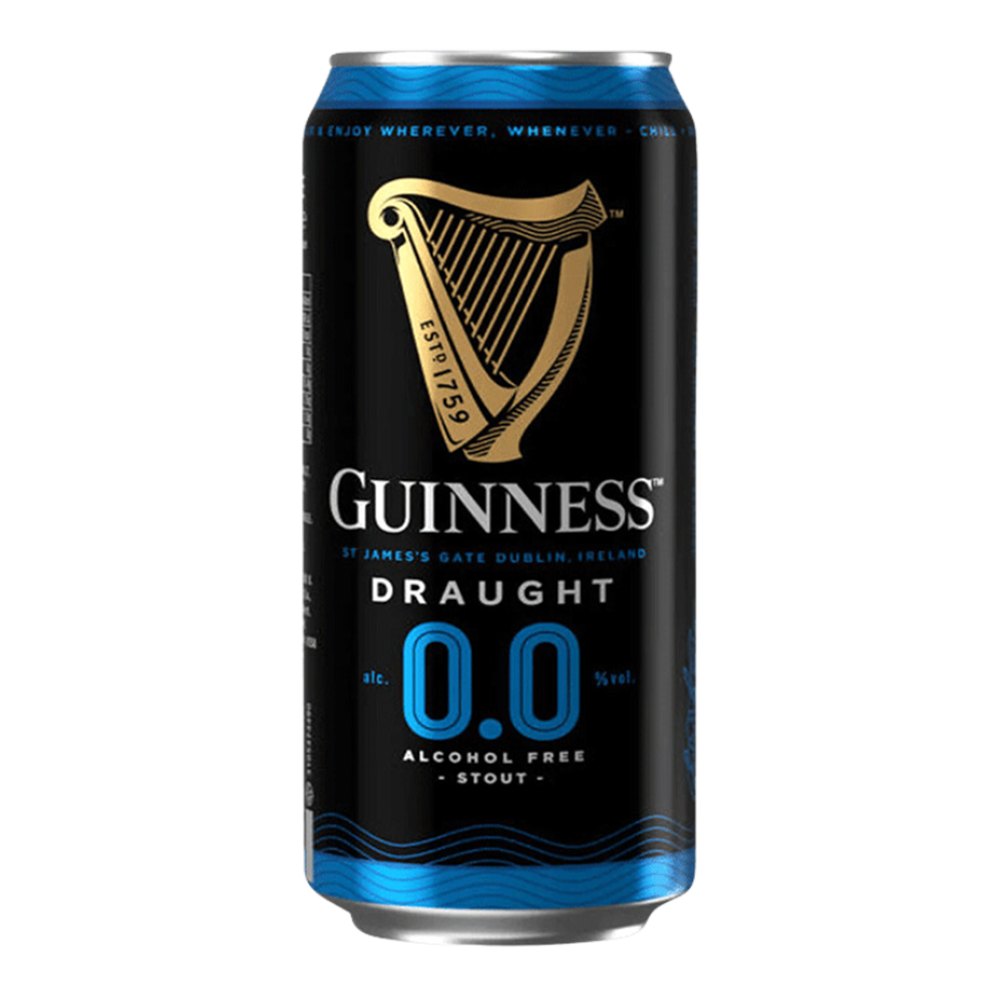
The most convincing like-for-like swap in the category, and a genuine zero.
Buy at Dry Drinker →Our review →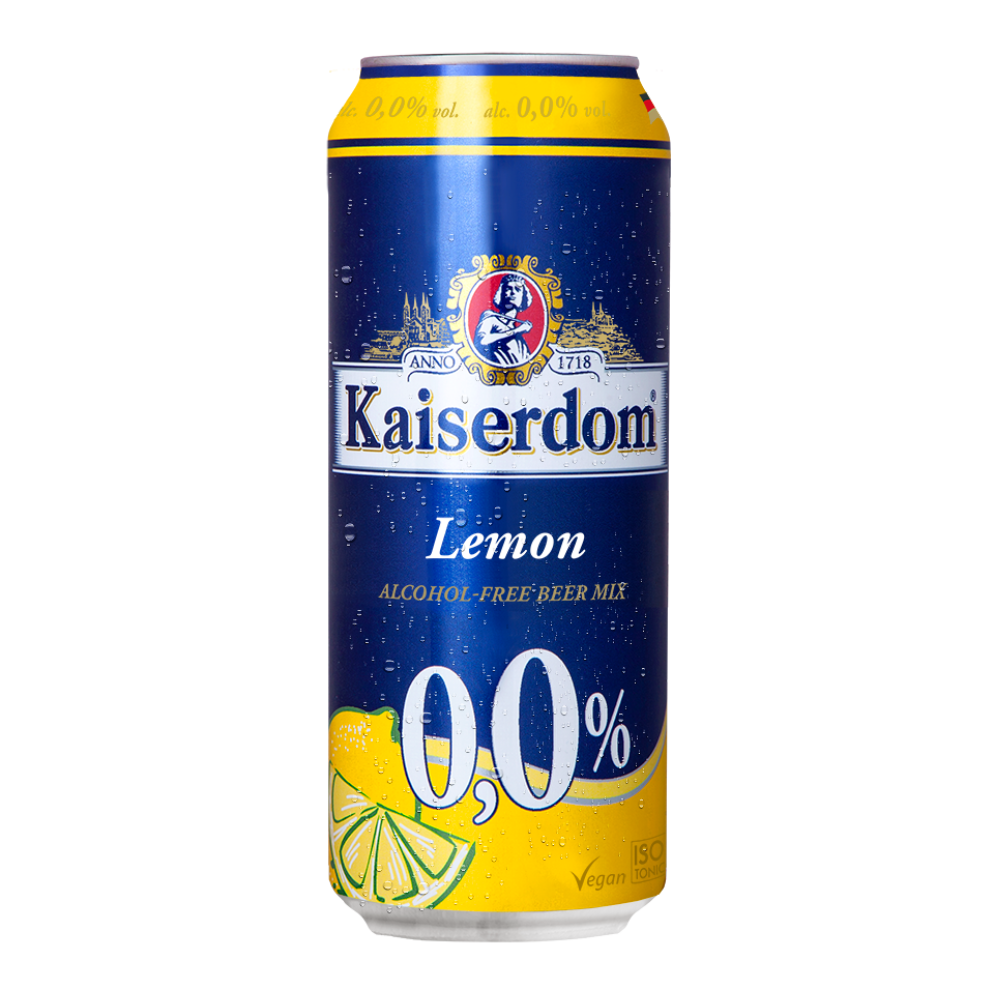
Bavarian wheat softness with a lemon lift, from a brewery at it since 1718.
Buy at Dry Drinker →Our review →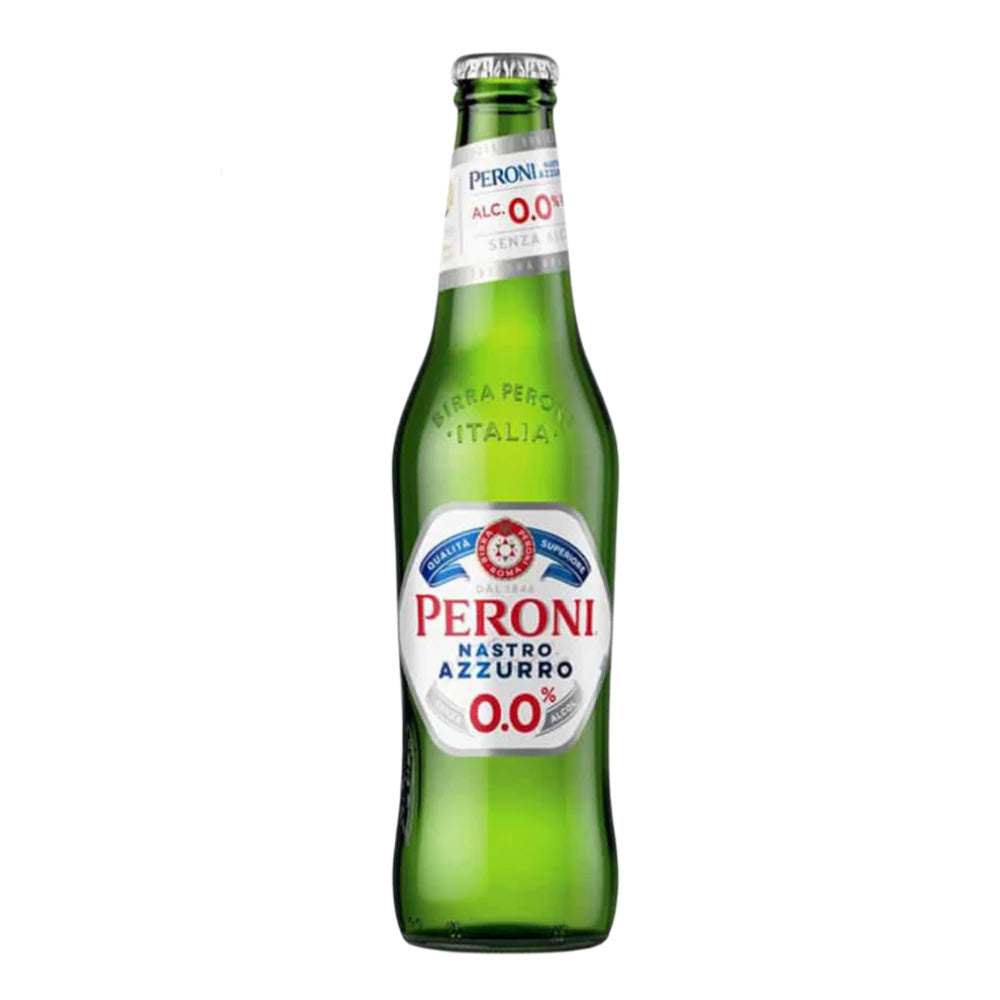
Crisp, precise Italian lager that happens to clear the strictest bar going.
Buy at Dry Drinker →Our review →
The ubiquitous one — and at 21 calories a bottle, the lightest here.
Buy at Dry Drinker →Our review →More where those came from in our best 0.0% alcohol-free beers round-up, or build a mixed case with the Crate Builder.
Frequently asked questions
Sources
Gorgus, E., Hittinger, M. & Schrenk, D. (2016). ‘Estimates of Ethanol Exposure in Children from Food not Labeled as Alcohol-Containing’, Journal of Analytical Toxicology, 40(7), 537–542. Read the study — source for all juice, vinegar, malt beer, bread and banana figures.
Kikkoman, consumer FAQ — source for the soy sauce figure of greater than 2% ABV.
Department of Health and Social Care labelling guidance, as summarised by Alcohol Change UK — source for the 0.05% / 0.5% / 1.2% descriptors and their voluntary status.