Paulaner Alcohol-Free Beers
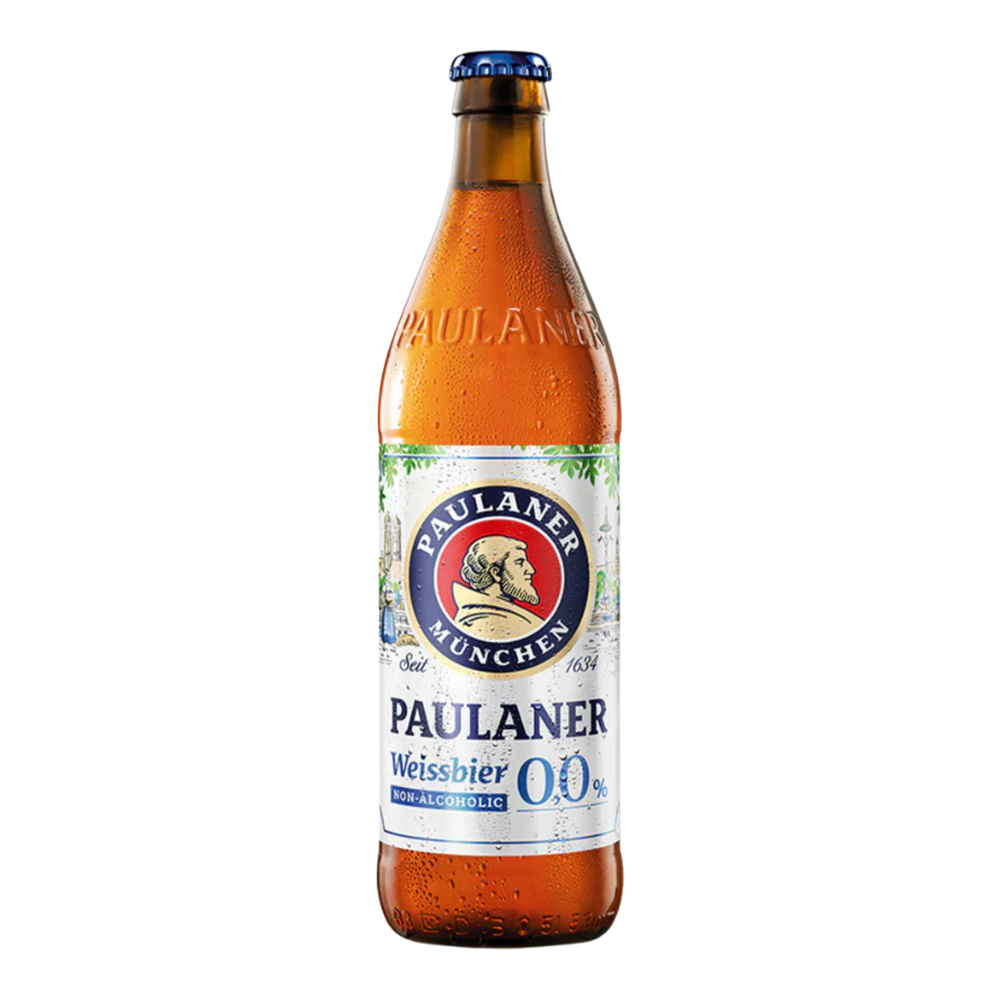
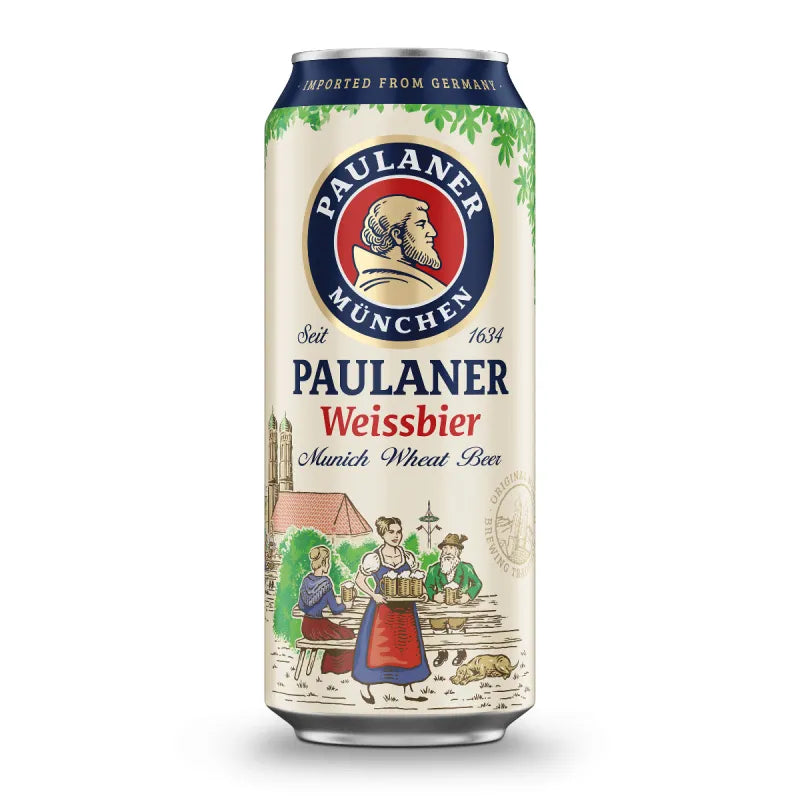
Two Paulaner beers in our directory: its alcohol-free Weissbier in bottles and in cans, which some UK shops list at 0.5% and others at 0.0%.
Paulaner dates itself to 1634 and is one of the six Munich breweries that brew beer for Oktoberfest. It is 70% owned by the Schörghuber group and 30% by Heineken, according to Wikipedia. Its alcohol-free Weissbier comes to the UK in bottles and cans, which some UK shops list at 0.5% and others at 0.0%.
- Company: Paulaner Brauerei Gruppe GmbH & Co. KGaA, Munich
- Dates from: 1634: a letter of 24 February 1634 is the first documented evidence of the brewery, it says
- Owner: Schörghuber Unternehmensgruppe 70%, Heineken International 30%, according to Wikipedia. Not independent
- Brewery: Munich-Langwied, since the start of 2016
- Size: 7.9 million hectolitres of drinks across the group in 2025, Lebensmittelpraxis reported
- Oktoberfest: One of the six breweries that brew for it, supplying three big festival halls
- Alcohol-free: Hefe-Weißbier Alkoholfrei, Weissbier 0,0%, Weißbier-Zitrone 0,0% and Münchner Hell Alkoholfrei
- Where to buy: The Alcohol Free Co, Dry Drinker and Wise Bartender
Who are Paulaner?
Paulaner’s own history starts with a letter of 24 February 1634 from Munich’s civilian brewers to the city council, which “is considered the first documented evidence of the Paulaner Brewery”, it says. The monks of the Neudeck ob der Au monastery in Munich brewed a strong beer, the brewery says. Wikipedia says the brewery was established in 1634 by the Paulaner Order, the name in Germany for the Order of Minims, and German Wikipedia says the brewery’s name refers to that order.
In 1751 the Paulaner monks were officially allowed to serve their beer, and in 1806, after secularisation, Franz Xaver Zacherl took control, Paulaner says. Its Salvator goes back to Brother Barnabas in 1773: “his recipe from that time still forms the basis for today’s Paulaner Salvator”, the brewery says. Its history gives 1944 to 1950 for the bombing that destroyed most of the brewery and its rebuilding.
Paulaner and Oktoberfest
“The right to produce Oktoberfestbier is held by the six breweries of the Club of Munich Brewers”, and “Only beer brewed within Munich’s city limits and in accordance with the Reinheitsgebot [the German Purity Law] may be sold at Oktoberfest”, according to Wikipedia. Paulaner is one of the six, and it supplies three big festival halls, German Wikipedia says. Paulaner says it got its licence to serve at Oktoberfest (the Wiesn) in 1818, and its Oktoberfest page says: “Since 1895, the unique Paulaner beer has been flowing from the taps here”.
Where Paulaner brews, and how big it is
Paulaner’s new brewery at Munich-Langwied opened on 15 September 2015, it says, and its 2024 environmental statement says brewing has been there, rather than at the Nockherberg, since the start of 2016. The same statement dates the merger of the Paulaner and Hacker-Pschorr breweries’ production to 1998. More than 600 people work for the Paulaner brewery, and around three million hectolitres of beer, beer mixes and non-alcoholic drinks leave it each year, it says.
Across the whole Paulaner Brauerei Gruppe, sales rose 13.8% in 2025 to 7.9 million hectolitres, not counting its majority stake in Kulmbacher Brauerei, Lebensmittelpraxis reported in February 2026. Paulaner says its beer is enjoyed in more than 80 countries; Wikipedia says more than 70. Paulaner runs 37 Paulaner brewhouses around the world, German Wikipedia says.
Who owns Paulaner?
Seventy per cent of the company is owned by the Schörghuber Unternehmensgruppe and 30% by the Dutch Heineken International B.V., according to Wikipedia and German Wikipedia. Paulaner says the Schörghuber family has held the majority since 1979. Because larger groups own it, we don’t list Paulaner as independent.
What Paulaner brews
Its full-strength range includes Hefe-Weißbier (Naturtrüb), Hefe-Weißbier Dunkel, Weißbier Kristallklar, Leichte Weiße, Weißbier-Zitrone Naturtrüb, Münchner Hell, Münchner Urtyp Natur, a Radler, its Oktoberfest Bier and Salvator, which it brews “naturally according to the Purity Law of 1516”, it says. Paulaner had 21.2% of the German wheat beer market in 2025, and its wheat beers, with their alcohol-free versions, sold 1.5% more while the market fell 6.3%, Lebensmittelpraxis reported. We found no awards on the Paulaner pages we read.
Paulaner’s alcohol-free beers
Paulaner says it made the first alcohol-free wheat beer: “The Waitzinger Weissbier is the first non-alcoholic weissbier in the world”, its history says, and today it’s called Hefe-Weißbier Non-Alcoholic. Its German site and Wikipedia date it to 1986. Wikipedia repeats the claim; we haven’t seen it checked independently.
Its list of alcohol-free products now has two wheat beers, Hefe-Weißbier Alkoholfrei and Weissbier 0,0%, along with Weißbier-Zitrone 0,0% and Münchner Hell Alkoholfrei; in the US it also sells a Weizen Radler 0.0%. In January 2026 Paulaner promoted all its alcohol-free beers and beer mixes together in one campaign for the first time, under a German slogan that translates as we’re just so free, Horizont reported. Henner Höper, its marketing director, said that for Paulaner alcohol-free beers are not a counter-design to classic beer.
For Weissbier 0,0%, Paulaner says it brews with “the traditional Weissbier technique” and “the alcohol is carefully removed after a thorough maturing process”. The process works with temperature and pressure, it says, and the exact method is a trade secret. Dry Drinker’s and Wise Bartender’s listings add: “Alcohol removed is converted into biogas to power the brewery.”
The Weissbier in the UK: 0.5% or 0.0%?
Our two Paulaner pages are the bottle and the can. The Alcohol Free Co and Dry Drinker list both at 0.5% ABV; Wise Bartender lists both at 0.0%. Paulaner gives its Weissbier 0,0% as 0,0% vol, while German shops list Hefe-Weißbier Alkoholfrei at below 0.5%. A German discounter sold the 0.5-litre can as “Paulaner Weißbier 0,0 %”, but from what the UK shops say we can’t tell which of the two wheat beers each UK listing is.
For Weissbier 0,0% Paulaner lists water, malted wheat, malted barley, carbon dioxide from fermentation, yeast and hops (Herkules), with light and dark wheat malts and Pilsner and Munich malts, and gives 24 kcal (102 kJ) per 100ml, with 5.3g of carbohydrate, of which 3.6g sugars. Open Food Facts and the German grocer Knuspr give Hefe-Weißbier Alkoholfrei 23 kcal per 100ml. Wise Bartender gives 24 kcal per 100ml for both its bottle and its can. Neither beer is gluten-free: both are brewed with wheat and barley malt. The Alcohol Free Co and Dry Drinker tag the cans vegan and Wise Bartender calls both vegan-friendly; Paulaner makes no vegan claim on the pages we read.
The Alcohol Free Co and Dry Drinker describe the bottle as “Hazy golden with banana, clove and soft spice aromas” and the can as “Pale golden with banana, clove and spice yeast aromas”. Alcohol Change UK’s review of the Hefe-Weißbier calls it “a near-perfect weißbier”; one reviewer at free-beer.co.uk was less taken with the 0.0%: “Poor show from a wheat beer dynasty.” The bottle and the can both have an Unhopped score of 8.0.
How Paulaner compares
Alcohol-free wheat beers from German breweries in our directory. Calories as published; checked 1 November 2026. Scores are Unhopped ratings out of 10.
The Paulaner beers in our directory
Calories as listed on our beer pages; the shops differ on ABV (see above). Checked 1 November 2026. Scores are Unhopped ratings out of 10.
Where to buy Paulaner
On 1 November 2026 the bottles were at The Alcohol Free Co (£2.74 a bottle, £15.64 for six), Dry Drinker (£15.95 for six) and Wise Bartender (£2.50 a bottle). The cans were at The Alcohol Free Co (£2.35 a can, £13.90 for six), Dry Drinker (£13.56 for six) and Wise Bartender (£2.30 a can). Those are affiliate links. For more, see our guides to the best alcohol-free wheat beer and the best German alcohol-free beer.
Facts checked against Paulaner’s own website and 2024 environmental statement, Wikipedia (English and German), Lebensmittelpraxis, Horizont, Open Food Facts, Knuspr, Discounto, Alcohol Change UK, free-beer.co.uk, The Alcohol Free Co, Dry Drinker and Wise Bartender, 1 November 2026.
Paulaner Beers in Our Directory
Compare alcohol-free beers by calories and ABV
🥗 Calorie Calculator →Track every beer, discover your taste archetype, join the community.