Support Your Local: Why Independent Pubs & Their Alcohol-Free Ranges Need You
Opinion · September 2026 · by Rich, founder of Unhopped
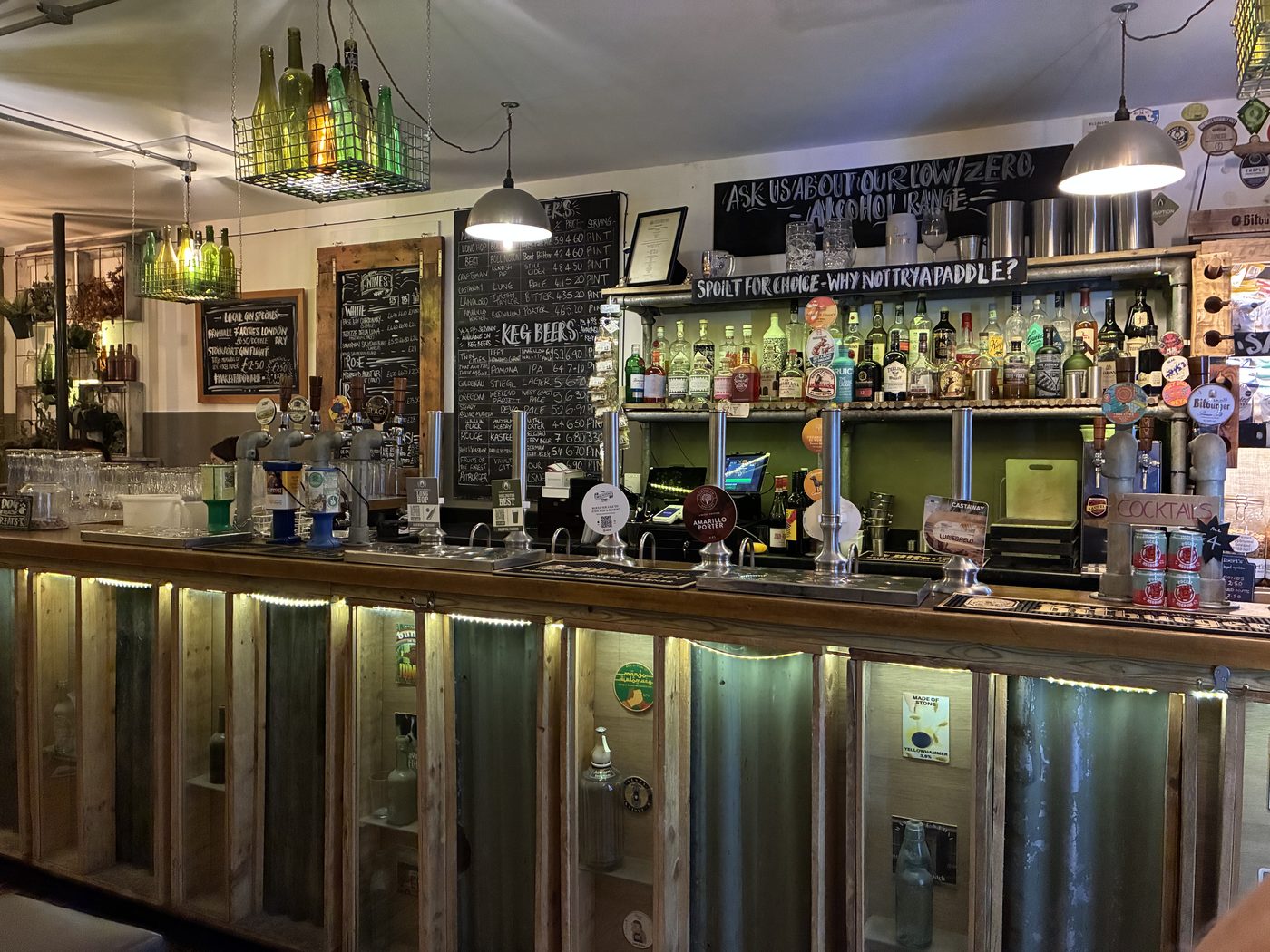
We spotted this chalkboard in a local tap room and it stopped us in our tracks: “Ask us about our low/zero alcohol range.” Not hidden, not apologised for — promoted, with pride, in a proper cask pub. It’s a small thing that says something big about where great pubs are heading, and why they deserve your support right now.
The state of the British pub in 2026
Let’s not sugar-coat it. The numbers are grim. According to the British Beer and Pub Association, 161 pubs closed across England, Scotland and Wales in the first quarter of 2026 alone — almost two a day, and up 26% on the same period a year earlier. Britain has lost more than 16,000 pubs since 2000, roughly a third of the total, leaving around 45,000 still standing.
The BBPA is blunt about the cause, and it’s not a lack of customers. As its chief executive Emma McClarkin put it, the closures are “avoidable because pubs are doing a brisk trade, but their profits are wiped out by a disproportionate tax burden and huge costs.” Business rates, beer duty, higher employer National Insurance, energy, wages — the bills landed all at once, and the margins simply aren’t there to absorb them.
The tax question — and the Wetherspoons campaign
This is where the argument gets political, and it’s worth laying out fairly. The most vocal campaigner is Wetherspoon’s founder Sir Tim Martin, who has spent years pushing for what he calls “tax equality” between pubs and supermarkets. His central point: pubs, bars and restaurants pay 20% VAT on food and drink, while supermarkets pay zero VAT on food — a saving they can use to sell alcohol cheaply. In his telling, that disparity has let supermarkets capture about half of pubs’ beer sales over four decades.
You don’t have to agree with everything Martin says — and plenty in the trade debate the detail — to recognise the underlying squeeze is real. The BBPA, CAMRA and independent operators broadly agree the sector is over-taxed relative to the retail that competes with it; they differ mainly on the fix (a VAT cut, business-rates reform, or both). The through-line is simple: the deck is stacked against the pub, and hardest of all against the small independent one without a national chain’s buying power to lean on.
What the supermarket can never sell you
Here’s the thing a four-pack from the big shop will never replace: the pub itself. The bar staff who know your order. The quiz night, the dog behind the bar, the stranger you end up chatting to. Pub closures have been directly linked to rising loneliness — when the last one in a village goes, a community loses its living room. That social value doesn’t show up on a supermarket receipt, and it’s exactly what’s being lost two times a day.
Where alcohol-free comes in
Now the hopeful part — and it’s where a good independent can actually win. Alcohol-free is one of the few genuinely growing things in the trade: match-day AF sales in the UK jumped 38% in a single summer, and younger drinkers are leading the shift. A cask pub that builds a thoughtful low-and-no range isn’t chasing a fad — it’s widening its door. The sober-curious, the Tuesday-night-with-work-tomorrow crowd, anyone simply not drinking tonight: all of them can now be in the round rather than nursing a lime and soda in the corner.
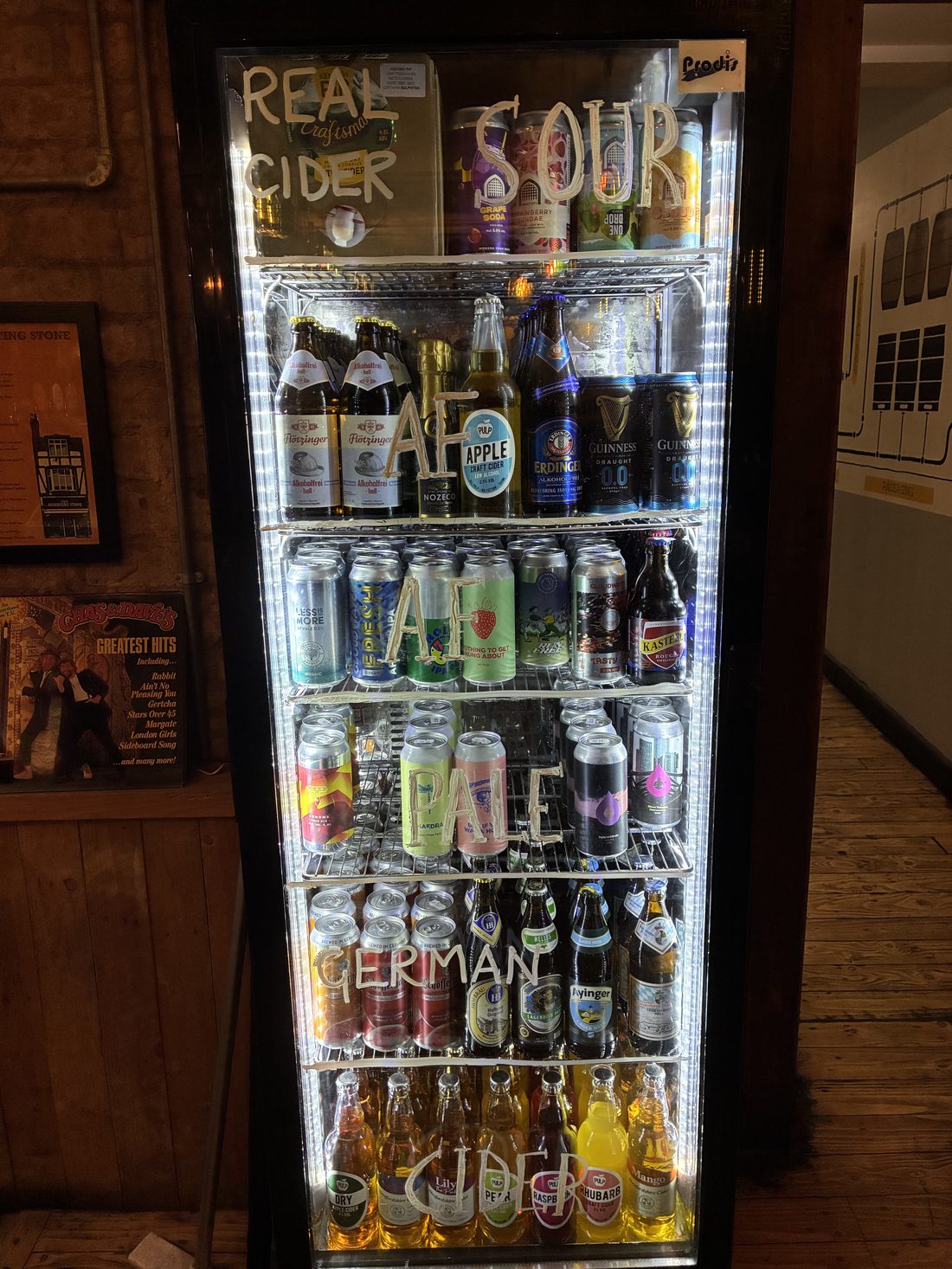
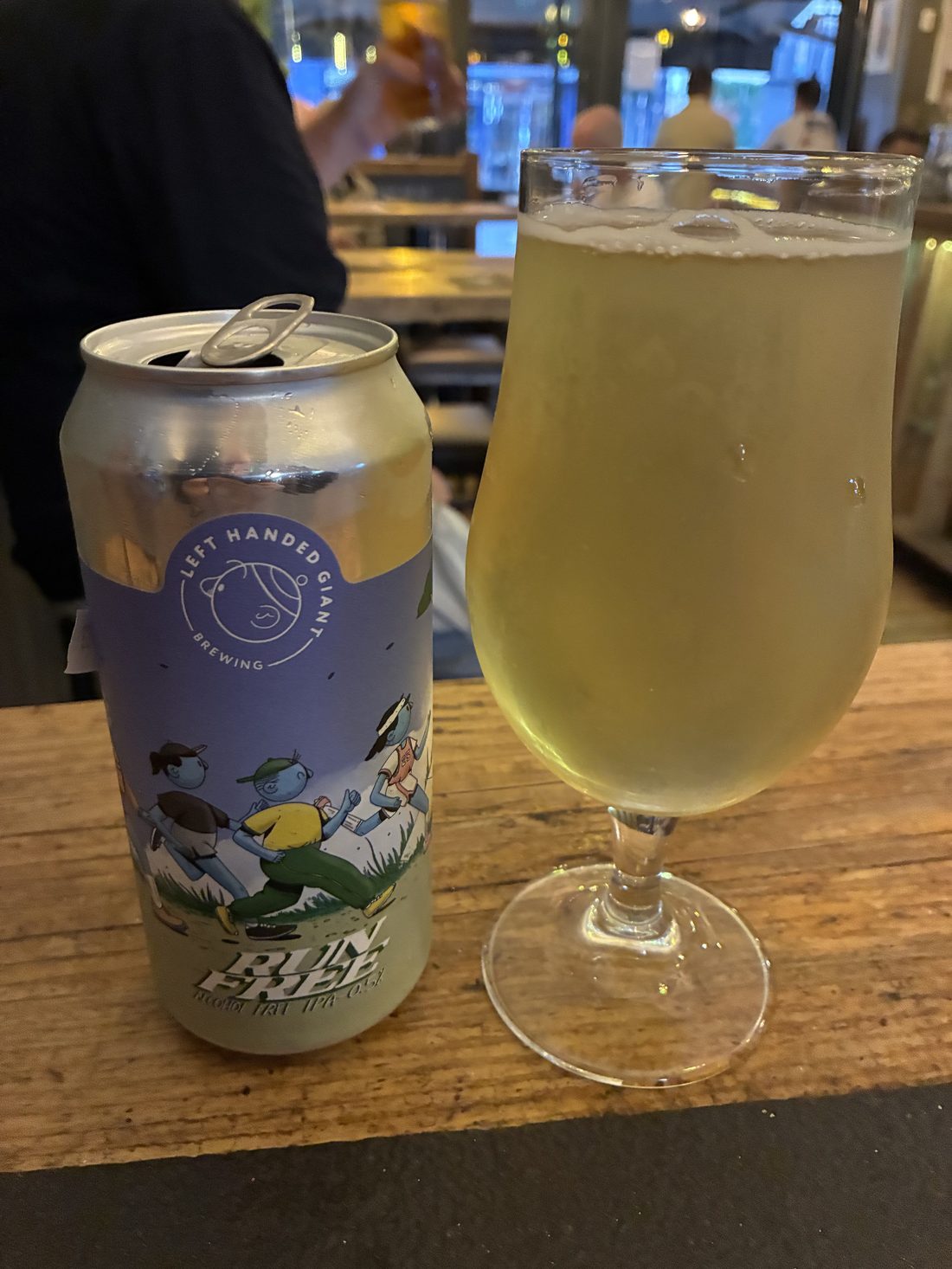
And this is the bit the supermarket can’t match. Anyone can stack Guinness 0.0 in a chiller. What a great tap room does — like the one in these photos — is curate: a hand-labelled fridge of German alkoholfrei, a proper AF IPA on the shelf next to the cask, a member of staff who can tell you what’s good and offer you a paddle to try three. That’s hospitality. That’s the thing worth paying a bit more for.
So, what can you actually do?
Support the small player, practically. Go to the pub — and go even when you’re not drinking, because an AF pint over the bar still puts money in the till and a body in the room. Order the alcohol-free option in the pub rather than saving your no-drinking nights for the sofa; it tells the landlord the range is worth stocking. Ask what’s good — use that chalkboard, try the paddle. And choose the independent when you can: the chains will be fine, but the free house on the corner is the one closing two times a day.
Not sure what to order? Our Swap Finder matches your usual pint to a great alcohol-free version, and our best 0.0% guide covers the ones worth asking for by name. The pub’s doing its bit by stocking them. The rest is up to us.